





![CAC removes 247 companies from database [Full List]](https://theprimenews.ng/wp-content/uploads/2025/08/Corporate-Affairs-Commission-CAC-building--600x400.webp)














































![‘I love Natasha’ – 2Face announces marriage plans with Edo lawmaker [VIDEO]](https://theprimenews.ng/wp-content/uploads/2025/02/GridArt_20250203_143302913-scaled-1-600x400.jpg)
























































![Europa League: 7 teams qualify for Round of 16, knockout stages [Full list]](https://theprimenews.ng/wp-content/uploads/2025/01/258743-1024x538-1-600x400.jpg)





![‘Jesus take the White House’ – Nathaniel Bassey ministers at Trump’s prayer breakfast [VIDEO]](https://theprimenews.ng/wp-content/uploads/2025/01/Nathaniel-Bassey-1024x681-1-600x400.webp)





















![Copa del Rey: All 8 teams in quarterfinal confirmed [Full list]](https://theprimenews.ng/wp-content/uploads/2025/01/1126686360.jpg.0-1024x683-1-600x400.webp)



































![‘I’m waiting on the Lord for kids’ – Eniola Badmus [VIDEO]](https://theprimenews.ng/wp-content/uploads/2025/01/Eniola-Badmus-1024x764-1-600x400.webp)

















































































![FIFPRO announces nominees for 2024 Men’s World XI [Full list]](https://theprimenews.ng/wp-content/uploads/2024/12/Image_20241202_160846_058-600x391.webp)





































![Jagun Jagun wins big at 2024 BON Awards [FULL LIST]](https://theprimenews.ng/wp-content/uploads/2024/11/20241013_181847-1024x715-1-600x400.jpg)






















































The Federal Government has said it is taking decisive steps to integrate renewable energy solutions with veterinary reforms in a bid to strengthen food security, livestock development, and rural health systems.
It said this process will begin with the deployment of off-grid refrigeration to ease the transportation of vaccinations and bridge critical gaps between livestock, health, and agriculture.
It added that the initiative would help curb post-harvest losses, improve the preservation of agricultural produce, and strengthen healthcare delivery across the country.

This was disclosed by the Managing Director of the Rural Electrification Agency, Abba Aliyu, and the Minister of Livestock Development, Idi Maiha, at the Off-Grid Refrigeration Inception Workshop held on Thursday in Abuja.
The two government officials announced joint initiatives designed to preserve agricultural produce, strengthen vaccine storage, and combat livestock diseases.
THE PRIME NEWS reports that Nigeria’s food security has long been threatened by weak agricultural value chains, high post-harvest losses, and livestock diseases that continue to erode farmers’ incomes.
According to the Food and Agriculture Organisation, the country loses an estimated 40 to 50 per cent of its perishable crops annually due to poor storage and transport infrastructure.
Similarly, outbreaks of livestock diseases such as Peste des Petits Ruminants, Newcastle disease, and African swine fever have continued to undermine animal health and productivity.
Speaking in his address, the Minister of Livestock Development, Idi Maiha, expressed optimism that the newly launched green refrigeration initiative would transform vaccine preservation and livestock healthcare across the country.
Speaking at the event, the minister noted that solution providers might not yet fully grasp the far-reaching impact the innovation would have on agriculture and animal health.
He explained that veterinary practice in Nigeria currently suffers from a severe lack of cold storage infrastructure, making it difficult to preserve vaccines at the minimum required temperature, noting that vaccines often lose potency before reaching farmers.
According to him, most vaccines lose their potency because of the absence of reliable energy and modern storage systems.
He said, “I am very excited about what is happening today, because you, the solution providers, have not really imagined the impact this green refrigeration is going to create. Let me give you an example.
“Today, in veterinary practice all over the country, we have a huge lacuna in providing cold storage infrastructure. All our vaccines have to be transported, managed, and stored at a minimum temperature. If you don’t achieve that, and in most cases, we are not able to achieve that because of the absence of energy in other solutions, like what we are launching here today.
“And when I got that invitation, I said, look, in this country, we have the solutions and we have the providers of the solutions. But there is a serious disconnect. There is a serious disconnect.
“The synergies we are building today will, in the next two to three years, close all these infrastructural gaps.”
The minister stressed that Nigeria already has both the technology and the providers of solutions, but suffers from a serious disconnect that hampers effective deployment.
He assured stakeholders that the synergies being created through the new initiative would, within the next two to three years, close the existing infrastructural gaps in vaccine storage and livestock management.
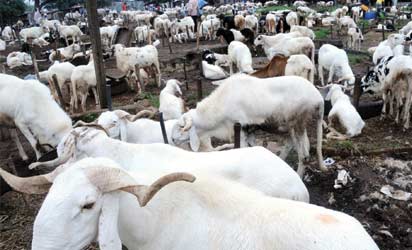
He further announced that the Federal Government is targeting the eradication of Peste des Petits Ruminants, a viral disease affecting sheep and goats, by 2030.
“We have a very ambitious plan to eradicate PPR for sheep and goats by 2030,” Maiha said.
Nigeria, he said, currently has 58 million cattle, 124 million sheep, and 70 million goats, but weak cold chain logistics remain a bottleneck in animal health management.
“To house 40 million doses of vaccines is not enough. We need small quantities that can reach the last mile and still retain potency. Sustainability is key. How many calves are surviving to maturity to provide milk or meat? These are the questions we must address if we want to secure food and livestock development,” Maiha added.
On his part, the REA boss explained that the deployment of off-grid refrigeration technology would directly support agriculture, health, and small businesses by reducing post-harvest losses, easing vaccine distribution, and creating jobs in rural areas.
“This is a concept that will end up connecting the dots, connecting agriculture, connecting livestock development, connecting health, connecting small-medium enterprise development, and I even picked something, it will also ease transportation and movement of goods and services or vaccination, as you said, from one place to another.
“So, for me, this is not just about providing off-grid refrigeration guidelines, but we are here, for example, today to support the food security development initiative of the country. What we are doing here will help support post-harvest losses, reduce post-harvest losses, enhance preservation of agricultural goods in the country, and we are also here for health, to support health development.
“What we are doing here would support the preservation of our drugs, our vaccination, and our injection, and also support the delivery of healthcare services to the last mile. What we are doing here also today is supporting livestock development,” he said.
He noted that the initiative, developed in partnership with the United Nations Environment Programme, aligns with Nigeria’s electrification agenda and global climate goals, as the refrigeration systems are powered by energy-efficient, climate-friendly technologies.
“These solutions not only minimise greenhouse gas emissions but also enable deeper integration of renewable energy systems. What we are doing today is more than a pilot; it is a step towards scaling solutions that directly impact households, farmers, health workers, and businesses across Nigeria,” the REA boss added.
The event ended with a renewed government resolve to integrate solar energy into agricultural and veterinary systems.