




![CAC removes 247 companies from database [Full List]](https://theprimenews.ng/wp-content/uploads/2025/08/Corporate-Affairs-Commission-CAC-building--600x400.webp)







































![‘I love Natasha’ – 2Face announces marriage plans with Edo lawmaker [VIDEO]](https://theprimenews.ng/wp-content/uploads/2025/02/GridArt_20250203_143302913-scaled-1-600x400.jpg)

















































![Europa League: 7 teams qualify for Round of 16, knockout stages [Full list]](https://theprimenews.ng/wp-content/uploads/2025/01/258743-1024x538-1-600x400.jpg)




![‘Jesus take the White House’ – Nathaniel Bassey ministers at Trump’s prayer breakfast [VIDEO]](https://theprimenews.ng/wp-content/uploads/2025/01/Nathaniel-Bassey-1024x681-1-600x400.webp)













![Copa del Rey: All 8 teams in quarterfinal confirmed [Full list]](https://theprimenews.ng/wp-content/uploads/2025/01/1126686360.jpg.0-1024x683-1-600x400.webp)

































![‘I’m waiting on the Lord for kids’ – Eniola Badmus [VIDEO]](https://theprimenews.ng/wp-content/uploads/2025/01/Eniola-Badmus-1024x764-1-600x400.webp)




































































![FIFPRO announces nominees for 2024 Men’s World XI [Full list]](https://theprimenews.ng/wp-content/uploads/2024/12/Image_20241202_160846_058-600x391.webp)



























![Jagun Jagun wins big at 2024 BON Awards [FULL LIST]](https://theprimenews.ng/wp-content/uploads/2024/11/20241013_181847-1024x715-1-600x400.jpg)







































The Federal Government has pledged to achieve net-zero greenhouse gas emissions by 2060 and ensure universal access to modern energy by 2030.
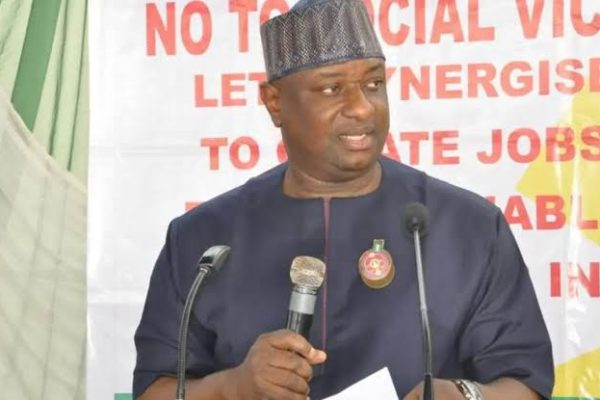
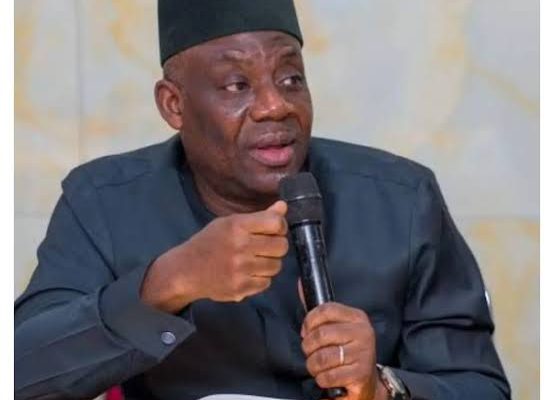
The Minister of Environment, Balarabe Lawal, said this on Wednesday at the opening of the first International Conference on Climate Change and Just Energy Transition, themed “Sustainable climate resilience and just energy transition in Africa: A collaborative pathway through policy, capacity building, research, and inclusion.”
The conference, organised by the West African Science Service Centre on Climate Change and Adapted Land Use in partnership with the FG, is the first of its kind in the region.

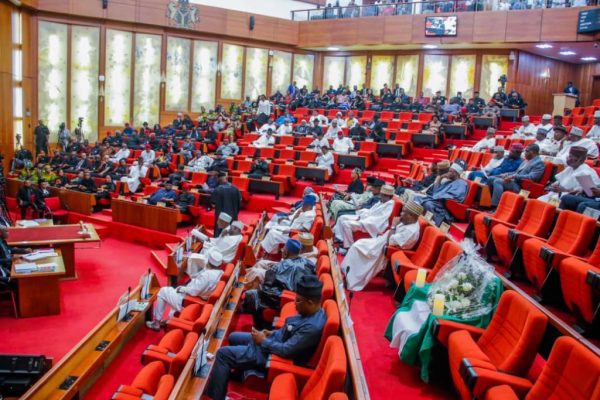
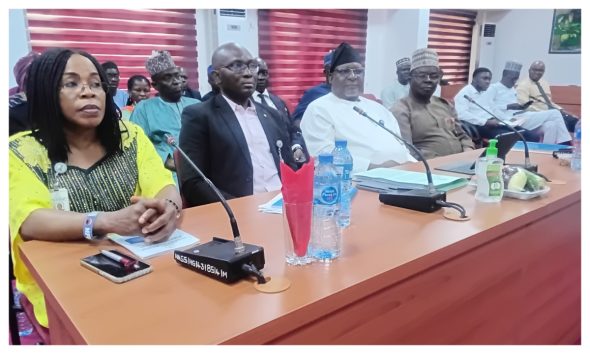
The event brought together scientists, policymakers, investors, and development partners to advance climate resilience and equitable energy solutions in West Africa.
Lawal emphasised that the Nigeria Climate Change Act and the Green Bond Programme provide the legal and financial frameworks to drive the country’s low-carbon transition.
“Nigeria’s commitment to a Just Transition is clear, deliberate, and rooted in our belief that no one should be left behind in the journey toward a low-carbon and climate-resilient future.
“Through a developed Energy Transition Plan, Nigeria aims to achieve net-zero emissions by 2060 while ensuring universal access to modern energy by 2030. Nigeria’s Climate Change Act provides the legal foundation for these ambitions, while the pioneering Green Bond Programme demonstrates how innovative finance can drive sustainable development. Furthermore, the recently submitted NDC 3.0 further strengthens Nigeria’s mitigation and adaptation commitments.
“Nigeria values WASCAL as a trusted partner in strengthening climate science capacity across West Africa. Together, we are building a foundation for a resilient and low-carbon future that speaks to our realities.
“I urge us all to move beyond declarations to translate our shared vision into actionable frameworks that empower communities, protect livelihoods, and unlock the enormous opportunities of the green economy.
“The journey before us is not easy, but it is a noble one. The world is watching Africa, even though we are not major contributors to global warming, yet our resolve to be part of the solution remains firm and inspiring. Africa is ever ready to serve as the architects of a new energy paradigm built on equity and innovation.
“I extend the appreciation of the Federal Ministry of Environment to our partners, and to the entire WASCAL team for their unwavering commitment, collaboration, as well as leadership in advancing climate research, capacity building, and sustainable solutions for the development of our great continent and country,” he stated.
He called on participants to translate scientific research into actionable policies that protect livelihoods, empower communities, and unlock green economy opportunities.
WASCAL Executive Director Prof. Emmanuel Ramde praised the government’s leadership and highlighted WASCAL’s role in building climate science capacity across West Africa, including training over 700 graduates and establishing a state-of-the-art climate competence centre in Ouagadougou.
Ramde described the conference as a platform to bridge science, policy, and society, stressing that collaboration and innovation are key to Africa’s climate resilience and just energy transition.
He said, “At WASCAL, our mission remains clear: to strengthen the resilience of West African countries against climate change through capacity building, research excellence, and climate services.
“Since our establishment, we have made remarkable progress: we have graduated over 700 PhD and Master’s degree holders, mainly from our 12 member countries and through our 17 graduate programmes; we have established a state-of-the-art Competence Centre in Ouagadougou, serving as a hub for climate data generation and applied research; we have advanced regional climate services and digital innovations that are helping governments, farmers, and communities make informed decisions; and we continue to build partnerships that link African expertise with global scientific excellence, driving local solutions for global challenges.”
He added that the conference, through its plenary sessions, breakout discussions, exhibitions, and networking events, will help foster new partnerships, generate policy recommendations, and promote innovative models that can shape national, regional, and global climate strategies.