










![CAC removes 247 companies from database [Full List]](https://theprimenews.ng/wp-content/uploads/2025/08/Corporate-Affairs-Commission-CAC-building--600x400.webp)





































![‘I love Natasha’ – 2Face announces marriage plans with Edo lawmaker [VIDEO]](https://theprimenews.ng/wp-content/uploads/2025/02/GridArt_20250203_143302913-scaled-1-600x400.jpg)













































![Europa League: 7 teams qualify for Round of 16, knockout stages [Full list]](https://theprimenews.ng/wp-content/uploads/2025/01/258743-1024x538-1-600x400.jpg)





![‘Jesus take the White House’ – Nathaniel Bassey ministers at Trump’s prayer breakfast [VIDEO]](https://theprimenews.ng/wp-content/uploads/2025/01/Nathaniel-Bassey-1024x681-1-600x400.webp)














![Copa del Rey: All 8 teams in quarterfinal confirmed [Full list]](https://theprimenews.ng/wp-content/uploads/2025/01/1126686360.jpg.0-1024x683-1-600x400.webp)





























![‘I’m waiting on the Lord for kids’ – Eniola Badmus [VIDEO]](https://theprimenews.ng/wp-content/uploads/2025/01/Eniola-Badmus-1024x764-1-600x400.webp)


































































![FIFPRO announces nominees for 2024 Men’s World XI [Full list]](https://theprimenews.ng/wp-content/uploads/2024/12/Image_20241202_160846_058-600x391.webp)






















![Jagun Jagun wins big at 2024 BON Awards [FULL LIST]](https://theprimenews.ng/wp-content/uploads/2024/11/20241013_181847-1024x715-1-600x400.jpg)
































By Oyez Olatunde Rex
Every serious conversation about development eventually arrives at a hard truth: States do not grow by slogans; they grow by specialization. And the most successful sub-national economies in the world identified what they could do better than others, and then built institutions around that advantage.
For Kwara State, one such opportunity lies in a sector Nigeria has historically underutilised but desperately needs to reform: *Advanced Healthcare Delivery* .

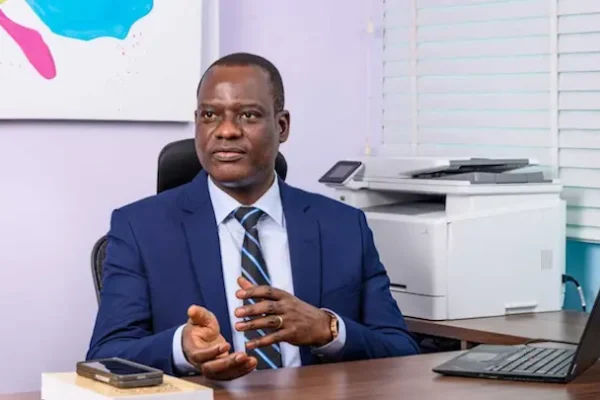
The idea of Kwara State as a medical tourism destination may sound ambitious. But ambition is precisely what separates stagnation from transformation. And if such a vision is to move from aspiration to execution, it would require leadership with rare, non-transferable assets. This is where Prof. Wale Sulaiman becomes indispensable.
Medical Tourism Is an Economic Strategy, Not a Social Programme
Globally, medical tourism is not a charity, it is a multi-billion dollar industry. Countries like India, Thailand, Turkey, and the UAE have turned advanced healthcare into export services, attracting foreign patients, foreign currency, and global expertise.
Nigeria already spends billions of dollars annually on outbound medical tourism. That capital leaves the country, strengthens foreign economies, and returns only as bills and disappointment. The question is not whether Nigeria needs medical tourism, but where within Nigeria such a hub can be credibly built.
Kwara’s geographic centrality, political stability, cost advantages, and available land place it in a strong structural position. What it has lacked is technical leadership capable of designing and managing world-class medical institutions.
Why Prof. Wale Sulaiman Is Not a Typical Political Aspirant
Prof. Sulaiman’s value is not symbolic; it is operational. Few Nigerians, politicians or technocrats have:
*Managed high-complexity medical facilities in advanced health systems,*
*Worked at the intersection of medicine, administration, policy,*
and
*Maintained professional relationships with top-tier global medical specialists.*
Running a world-class medical city is closer to running a multinational enterprise than a ministry. It demands:
*Governance discipline,*
*International accreditation knowledge,*
*Physician recruitment networks,*
*Compliance with global standards,* and
*Long-term capital planning.*
These are not learn-on-the-job competencies. Prof. Sulaiman already possesses them.
Leveraging Global Health Capital and Strategic Partnerships
The global health sector is undergoing a structural shift. Governments, development finance institutions, and private capital, particularly from the United States and allied economies, are increasingly focused on health infrastructure investment in emerging markets.
A Kwara government led by someone with credibility in Western medical and policy circles would be uniquely positioned to attract:
*Bilateral health infrastructure partnerships,*
*Diaspora medical investment,*
*Teaching hospital affiliations,* and
*Technology transfer arrangements.*
Leadership matters here. International medical partnerships are not signed because of political enthusiasm; they are signed because of trust in institutional leadership. Prof. Sulaiman’s career offers that trust currency.
Ilorin as the Anchor of a Medical City
A single mega, world-class medical facility in Ilorin that is properly conceptualised and phased, would immediately reposition Kwara on the continental map. Such a facility would not exist in isolation. Its ripple effects would be structural.
First, foreign currency inflow. Patients from across Nigeria, West Africa, and Sub-Saharan Africa would pay in hard currency or high-value local equivalents, reversing the current outward flow.
Second, hospitality and services expansion. Medical tourism does not only employ doctors. It creates demand for:
*Hotels and serviced apartments,*
*Transport and logistics,*
*Catering, pharmaceuticals, diagnostics,*
*Facility management, and insurance services* and,
*Entire value chain grows around the facility*
Third, human capital retention. World-class facilities attract top medical professionals. Nigerian doctors abroad will return when they can practise at global standards.
Training pipelines would be strengthened and local universities will benefit from teaching and research partnerships.
Fourth, urban regeneration. Cities anchored by medical hubs experience infrastructure upgrades, property development, and improved public services, not by accident, but by necessity.
The Strategic Difference Leadership Makes
Many states speak about development. Few understand sequencing.
Medical tourism cannot be improvised; it must be engineered.
A governor without sectoral depth would delegate blindly. A governor with Prof. Sulaiman’s background would govern with first-hand understanding, knowing what questions to ask, what standards to demand, and which shortcuts to reject.
This is the quiet but critical difference between ambition and achievement.
Beyond Politics: This is a Generational Opportunity for Kwara
If Kwara becomes a recognised medical tourism destination, the state’s economy changes permanently. Its revenue base diversifies. Its global relevance expands. Its young people see futures beyond civil service queues.
Such transformations are rare, and leadership windows even rarer.
Prof. Wale Sulaiman represents a convergence of timing, competence, and global relevance that does not often present itself at the sub-national level. His election would not merely be a political change; it would be economic repositioning of the state.
In the final analysis, the question before Kwara is not whether this vision is possible.
It is whether Kwara will recognise, in time, that some leaders are not just fit to govern, but fit to transform.