











![CAC removes 247 companies from database [Full List]](https://theprimenews.ng/wp-content/uploads/2025/08/Corporate-Affairs-Commission-CAC-building--600x400.webp)









































![‘I love Natasha’ – 2Face announces marriage plans with Edo lawmaker [VIDEO]](https://theprimenews.ng/wp-content/uploads/2025/02/GridArt_20250203_143302913-scaled-1-600x400.jpg)















































![Europa League: 7 teams qualify for Round of 16, knockout stages [Full list]](https://theprimenews.ng/wp-content/uploads/2025/01/258743-1024x538-1-600x400.jpg)



![‘Jesus take the White House’ – Nathaniel Bassey ministers at Trump’s prayer breakfast [VIDEO]](https://theprimenews.ng/wp-content/uploads/2025/01/Nathaniel-Bassey-1024x681-1-600x400.webp)















![Copa del Rey: All 8 teams in quarterfinal confirmed [Full list]](https://theprimenews.ng/wp-content/uploads/2025/01/1126686360.jpg.0-1024x683-1-600x400.webp)
































![‘I’m waiting on the Lord for kids’ – Eniola Badmus [VIDEO]](https://theprimenews.ng/wp-content/uploads/2025/01/Eniola-Badmus-1024x764-1-600x400.webp)









































































![FIFPRO announces nominees for 2024 Men’s World XI [Full list]](https://theprimenews.ng/wp-content/uploads/2024/12/Image_20241202_160846_058-600x391.webp)





























![Jagun Jagun wins big at 2024 BON Awards [FULL LIST]](https://theprimenews.ng/wp-content/uploads/2024/11/20241013_181847-1024x715-1-600x400.jpg)




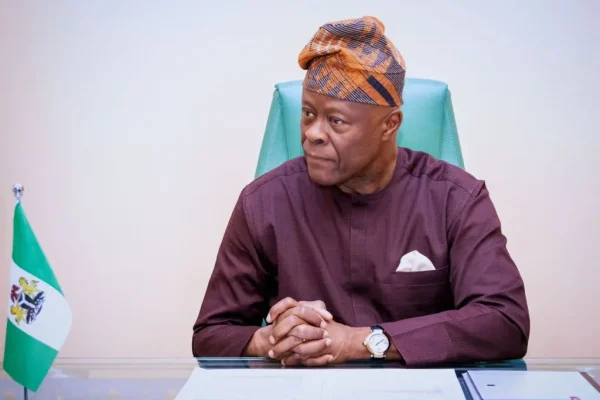


















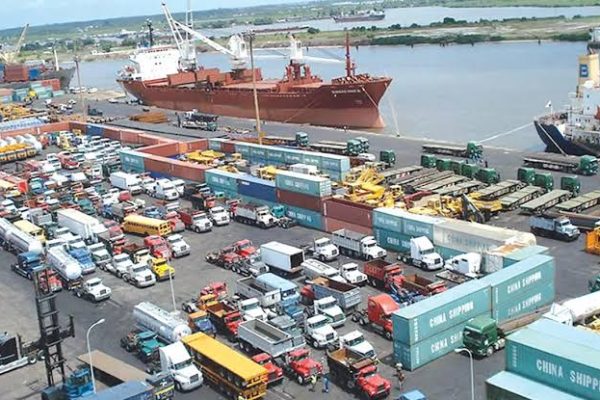



















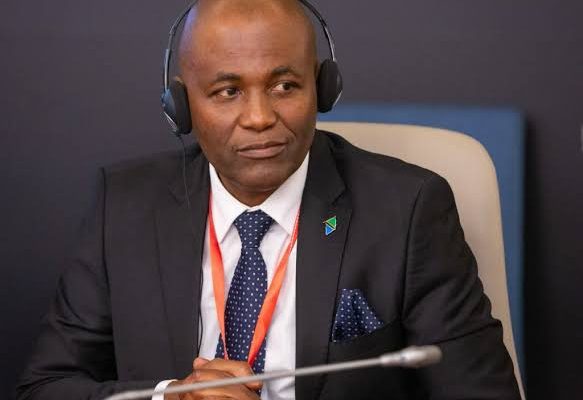
The Federal Government is working with authorities in Japan to regulate the importation of used vehicles and spare parts into Nigeria, the Director-General of the National Automotive Design and Development Council (NADDC), Joseph Osanipin, has said.
Osanipin, in an interview, said the government is partnering Japan because most of the imported spare parts come from the East Asian country.
The government recently said it was implementing stricter regulatory measures to curb the influx of substandard automotive parts into Nigeria.

Osanipin had said that the government intended to address this by focusing on pre-export certification from source countries such as Japan.
Osanipin stated that the council was also working closely with the Standards Organisation of Nigeria (SON) to strengthen standards enforcement across the automotive value chain, particularly on used vehicles and parts imported into the country.
He said: “Regulations are already in place and we are working to make them more effective.
“Most of these vehicles come from Japan, which is why we have even gone to Japan to engage directly with the relevant authorities and operators there.”
According to him, the new framework being developed would require mandatory certification of vehicles and parts at the point of origin before they are shipped to Nigeria.
This certification, he explained, would be issued only after the vehicles or parts had passed prescribed tests and accreditation processes.
“What we are trying to do now is to ensure that, beyond the issue of end-of-life vehicles, certification is done at source.
“Anybody exporting to Nigeria will be required to be certified at the spot where the vehicle or parts are coming from. Once it passes the test, it will come with a certificate, and that certificate will form part of the shipping documents,” he added.
Osanipin maintained that any shipment that arrives in Nigeria without the required certification would be rejected.
He explained that the policy was partly aimed at addressing the problem of vehicles officially declared unfit for use in their countries of origin.
Such vehicles, he noted, were often dismantled abroad and shipped to Nigeria under the guise of spare parts.
“In countries like Japan, once a vehicle is declared end-of-life, it is considered unfit. They dismantle it and say they want to dispose of it.
“What happens in practice is that some of these are shipped out, effectively transferring their problem to another country,” he said.
Osanipin revealed that in Japan, vehicle owners pay an end-of-life or recycling fee at the point of registration, intended to cover the cost of proper disposal when the vehicle is no longer roadworthy.
He expressed that the Nigerian government was determined to close that loophole through cooperation with foreign authorities and stricter documentation requirements.
He stated that once the policy is fully supported by regulation, illegal shipments of vehicles would not be allowed to berth in the country.
On the issue of informal vehicle assembly activities within the country, the NADDC boss clarified that such operators are not recognised as licensed assemblers.
He insisted that the council or any other authorities within the country had not approved such assembly licences for any such organisations.
He, however, posited that the NADDC required cooperation of other agencies to tackle the myriad of challenges in the sector, stressing that partnership with SON and other relevant agencies was critical to the system.
“We know we cannot solve this problem in isolation. That is why we are working with the SON on standards and enforcement, and why we are building stronger policies and regulations to deal with the issue comprehensively,” he said.
Osanipin added that once the new regulatory framework was fully in place, the government would have sufficient legal backing to clamp down on offenders across the automotive value chain.