







![CAC removes 247 companies from database [Full List]](https://theprimenews.ng/wp-content/uploads/2025/08/Corporate-Affairs-Commission-CAC-building--600x400.webp)































![‘I love Natasha’ – 2Face announces marriage plans with Edo lawmaker [VIDEO]](https://theprimenews.ng/wp-content/uploads/2025/02/GridArt_20250203_143302913-scaled-1-600x400.jpg)



































![Europa League: 7 teams qualify for Round of 16, knockout stages [Full list]](https://theprimenews.ng/wp-content/uploads/2025/01/258743-1024x538-1-600x400.jpg)



![‘Jesus take the White House’ – Nathaniel Bassey ministers at Trump’s prayer breakfast [VIDEO]](https://theprimenews.ng/wp-content/uploads/2025/01/Nathaniel-Bassey-1024x681-1-600x400.webp)









![Copa del Rey: All 8 teams in quarterfinal confirmed [Full list]](https://theprimenews.ng/wp-content/uploads/2025/01/1126686360.jpg.0-1024x683-1-600x400.webp)




























![‘I’m waiting on the Lord for kids’ – Eniola Badmus [VIDEO]](https://theprimenews.ng/wp-content/uploads/2025/01/Eniola-Badmus-1024x764-1-600x400.webp)




















































![FIFPRO announces nominees for 2024 Men’s World XI [Full list]](https://theprimenews.ng/wp-content/uploads/2024/12/Image_20241202_160846_058-600x391.webp)













![Jagun Jagun wins big at 2024 BON Awards [FULL LIST]](https://theprimenews.ng/wp-content/uploads/2024/11/20241013_181847-1024x715-1-600x400.jpg)




















By Mutiu Aremu
As political discussions gradually begin to shape the direction of the 2027 governorship election in Kwara State, the question of leadership succession has started to draw the attention of political observers, stakeholders, and citizens alike.
For a state widely known as the State of Harmony, leadership choices have always carried consequences that extend far beyond electoral victories.

They influence the pace of development, the quality of governance, and the confidence of the people in the future of their state.
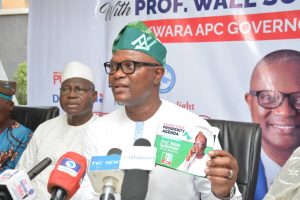
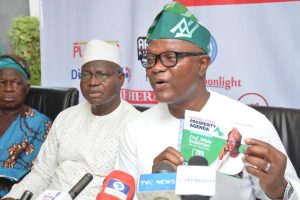
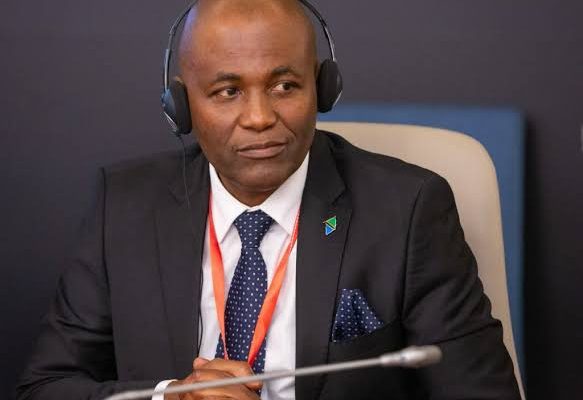
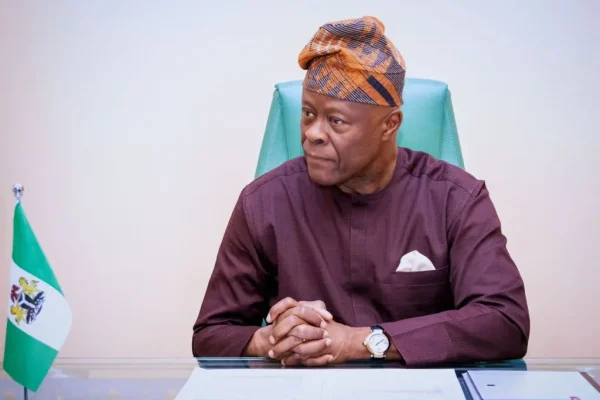
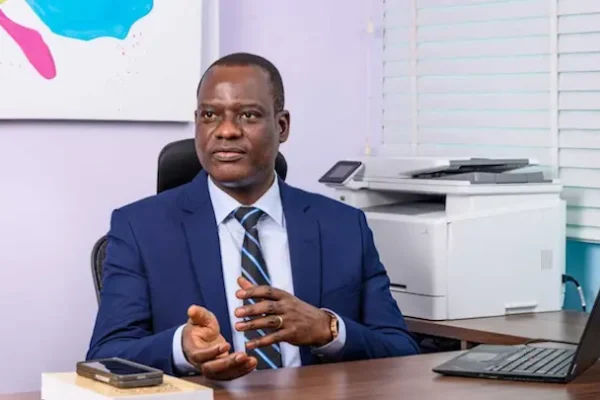
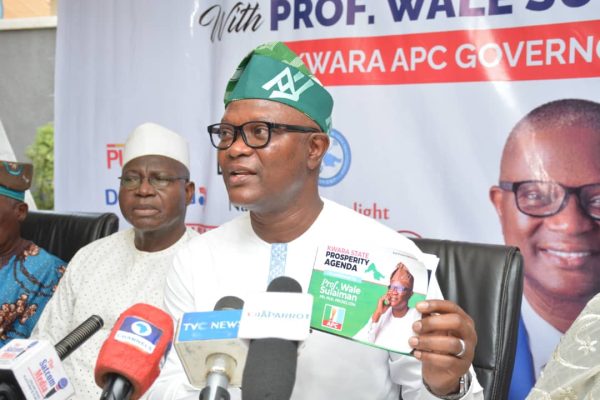
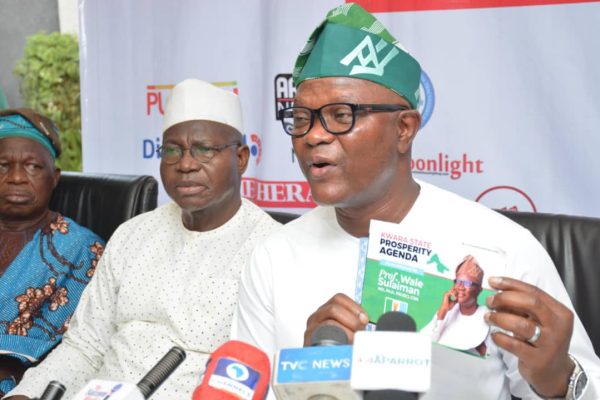
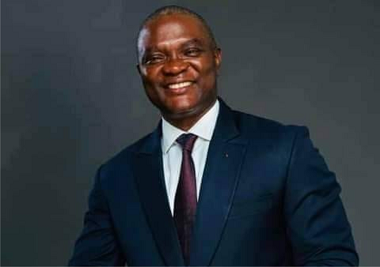
In this unfolding conversation, the name Prof. Wale Sulaiman increasingly stands out as a figure whose professional background and public service record offer an interesting perspective on the kind of leadership Kwara may require in the years ahead.
Prof. Sulaiman’s career journey reflects an uncommon blend of intellectual achievement and humanitarian commitment.
As a globally respected neurosurgeon, he has built a reputation within advanced medical systems across the world, working in environments where precision, innovation, and leadership are not merely valued but required.
Such global exposure provides him with a rare vantage point one that allows him to understand how institutions function in societies where development is driven by knowledge, strategic planning, and disciplined governance.
Yet beyond the prestige associated with international professional success lies a dimension of his story that resonates deeply with many people in Kwara: his continuing commitment to giving back to the society that nurtured him.
Over the years, his involvement in humanitarian programs, health interventions, and educational support initiatives has touched numerous lives across communities in the state.
These contributions reveal a leadership outlook grounded not only in professional accomplishment but also in a genuine concern for social impact.
At a time when governance across many societies is increasingly expected to be knowledge-driven and development-focused, leaders with global exposure and local commitment often possess the tools required to bridge the gap between aspiration and reality.
For Kwara State, whose youthful population continues to seek opportunities in education, employment, and entrepreneurship, leadership capable of connecting local ambition with global possibilities could prove particularly significant.
Within the political landscape of the All Progressives Congress (APC), discussions about the future will inevitably involve consultations, debates, and strategic decisions among party stakeholders.
Such processes are natural in democratic systems where leadership succession is shaped by collective reflection.
However, beyond party calculations lies a broader question that concerns the long-term future of Kwara State: what type of leadership best positions the state for the next phase of development?
For many observers, the professional pedigree, humanitarian engagement, and intellectual outlook associated with Prof. Wale Sulaiman present an intriguing answer to that question.
Leadership in the modern era demands more than political experience alone. It requires the ability to think strategically, inspire confidence, mobilize talent, and build institutions capable of sustaining progress long after electoral cycles have passed.
As the road toward 2027 gradually unfolds, the people of Kwara State will continue to evaluate the individuals whose vision and capabilities align with their hopes for the future.
In that unfolding reflection, the name of Prof. Wale Sulaiman may well remain part of an important conversation about the kind of leadership capable of guiding Kwara into its next chapter of development.