











![CAC removes 247 companies from database [Full List]](https://theprimenews.ng/wp-content/uploads/2025/08/Corporate-Affairs-Commission-CAC-building--600x400.webp)




































![‘I love Natasha’ – 2Face announces marriage plans with Edo lawmaker [VIDEO]](https://theprimenews.ng/wp-content/uploads/2025/02/GridArt_20250203_143302913-scaled-1-600x400.jpg)












































![Europa League: 7 teams qualify for Round of 16, knockout stages [Full list]](https://theprimenews.ng/wp-content/uploads/2025/01/258743-1024x538-1-600x400.jpg)


![‘Jesus take the White House’ – Nathaniel Bassey ministers at Trump’s prayer breakfast [VIDEO]](https://theprimenews.ng/wp-content/uploads/2025/01/Nathaniel-Bassey-1024x681-1-600x400.webp)











![Copa del Rey: All 8 teams in quarterfinal confirmed [Full list]](https://theprimenews.ng/wp-content/uploads/2025/01/1126686360.jpg.0-1024x683-1-600x400.webp)

































![‘I’m waiting on the Lord for kids’ – Eniola Badmus [VIDEO]](https://theprimenews.ng/wp-content/uploads/2025/01/Eniola-Badmus-1024x764-1-600x400.webp)


































































![FIFPRO announces nominees for 2024 Men’s World XI [Full list]](https://theprimenews.ng/wp-content/uploads/2024/12/Image_20241202_160846_058-600x391.webp)























![Jagun Jagun wins big at 2024 BON Awards [FULL LIST]](https://theprimenews.ng/wp-content/uploads/2024/11/20241013_181847-1024x715-1-600x400.jpg)



































The Joint Admissions and Matriculation Board (JAMB) has extended the 2025 admissions deadline for public universities from Friday, October 31, 2025, to Monday, November 17, 2025.
This was announced in a statement signed by the Board’s Public Communication Adviser, Dr. Fabian Benjamin, who explained that the extension became necessary due to unforeseen circumstances preventing some institutions from completing their admissions processes on time.
JAMB recalled that during the 2025 Policy Meeting on Admissions held on July 18, 2025, under the chairmanship of the Minister of Education, Dr. Maruf Tunji Alausa, all public universities were initially expected to conclude admissions by October 31, 2025.

The Board said the original timeline was strategically designed to allow other tertiary institutions — including private universities, polytechnics, colleges of education, and innovation enterprise institutions — to complete their own admissions before the final national deadline of December 31, 2025.
While acknowledging the efforts of institutions that worked diligently to meet the initial deadline, JAMB said the extension became unavoidable due to two major developments:
An appeal by the Committee of Vice-Chancellors of Nigerian Universities (AVCNU), following disruptions caused by a court order which halted the 2025/2026 admission process until it was lifted on October 28, 2025.
The accreditation of 229 new academic programmes across 37 universities by the National Universities Commission (NUC) on October 29, 2025, requiring fresh planning and scheduling for admissions into the newly approved courses.
“In light of these developments, and to ensure fairness and inclusiveness, the Board hereby extends the deadline for the completion of 2025 public university admissions to Monday, 17th November, 2025,” the statement said.
JAMB stressed that the new date is final and binding, urging all public universities to comply fully.
Dr. Benjamin reaffirmed the Board’s commitment to a seamless, transparent, and credible admissions process that supports national education goals while respecting institutional autonomy.
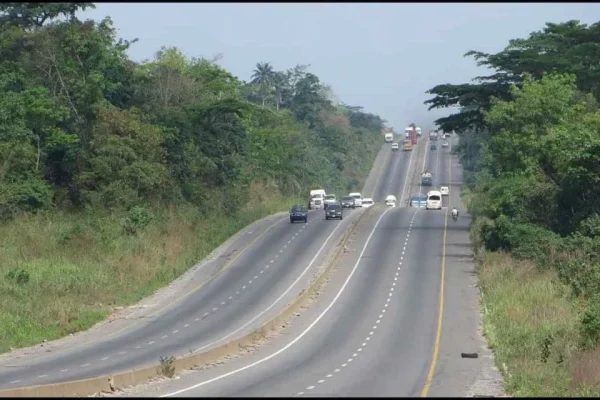
The Permanent Secretary, Federal Ministry of Works, Olufunsho Adebiyi, has disclosed that approximately 95 per cent of Nigerians rely on road transport for their movement and the transportation of goods across the country.
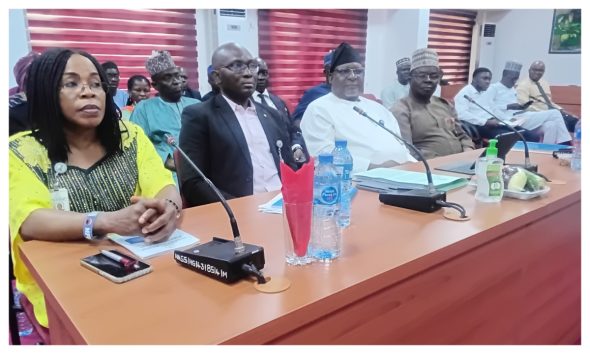
Adebiyi stated this while delivering his address at the 30th meeting of the National Council on Works, which opened on Monday in Ado-Ekiti, Ekiti State.
In a statement by the Director of Press and Public Relations, Mohammed A. Ahmed, Adebiyi explained that despite the growth of other modes of transportation such as rail, air, and water, road transport remains the dominant means of mobility in Nigeria, a situation that places enormous pressure on the nation’s road infrastructure.
“The resultant effect is heavy traffic volume and rapid deterioration of our pavements caused by heavy-duty vehicles and cargo movements,” he stated.
The Permanent Secretary emphasised that the completion and effective utilisation of the national rail network would significantly reduce road congestion, improve safety, and enhance economic efficiency.
“If rail transport becomes fully operational and reliable, many Nigerians would prefer to travel by train. It is cheaper, safer, faster, and less stressful,” he disclosed.
Adebiyi thanked the Governor of Ekiti State, Mr. Biodun Oyebanji, for hosting the event and for the warm hospitality extended to delegates.
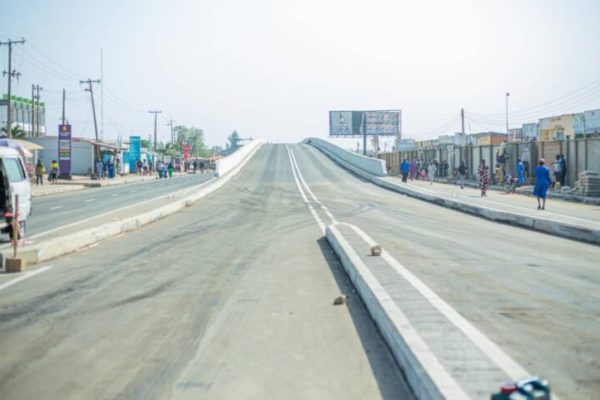
He noted that holding the council meeting in Ado Ekiti was symbolic, as it provides an opportunity to showcase the state’s infrastructure development strides.
He also lauded the Minister of Works, Sen. David Umahi, and the Minister of State for Works, Bello M. Goronyo, for their exceptional leadership and untiring commitment to improving the nation’s road network, ensuring transparency in project implementation and management, and upholding professional standards in engineering practice.
The theme of the 30th National Council on Works, “Discipline, Transparency, and Innovation in Engineering Practice,” underscores the Federal Government’s resolve to entrench integrity, accountability, and creativity in infrastructure management and delivery.