







![CAC removes 247 companies from database [Full List]](https://theprimenews.ng/wp-content/uploads/2025/08/Corporate-Affairs-Commission-CAC-building--600x400.webp)































![‘I love Natasha’ – 2Face announces marriage plans with Edo lawmaker [VIDEO]](https://theprimenews.ng/wp-content/uploads/2025/02/GridArt_20250203_143302913-scaled-1-600x400.jpg)


































![Europa League: 7 teams qualify for Round of 16, knockout stages [Full list]](https://theprimenews.ng/wp-content/uploads/2025/01/258743-1024x538-1-600x400.jpg)



![‘Jesus take the White House’ – Nathaniel Bassey ministers at Trump’s prayer breakfast [VIDEO]](https://theprimenews.ng/wp-content/uploads/2025/01/Nathaniel-Bassey-1024x681-1-600x400.webp)








![Copa del Rey: All 8 teams in quarterfinal confirmed [Full list]](https://theprimenews.ng/wp-content/uploads/2025/01/1126686360.jpg.0-1024x683-1-600x400.webp)


























![‘I’m waiting on the Lord for kids’ – Eniola Badmus [VIDEO]](https://theprimenews.ng/wp-content/uploads/2025/01/Eniola-Badmus-1024x764-1-600x400.webp)























































![FIFPRO announces nominees for 2024 Men’s World XI [Full list]](https://theprimenews.ng/wp-content/uploads/2024/12/Image_20241202_160846_058-600x391.webp)














![Jagun Jagun wins big at 2024 BON Awards [FULL LIST]](https://theprimenews.ng/wp-content/uploads/2024/11/20241013_181847-1024x715-1-600x400.jpg)
















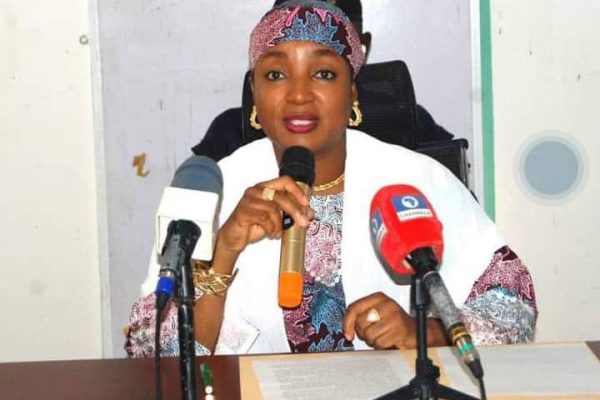








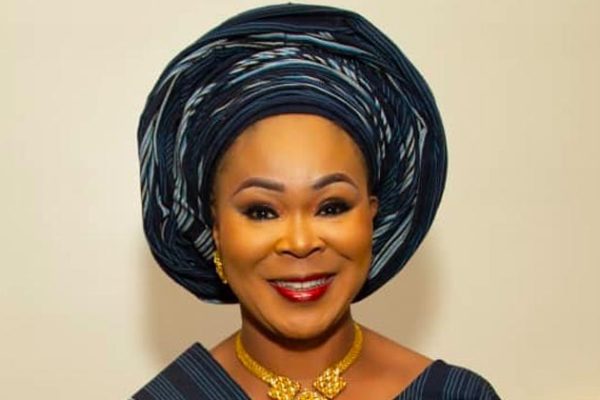
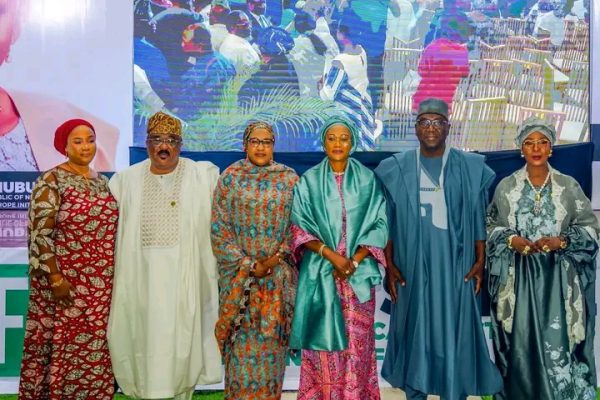
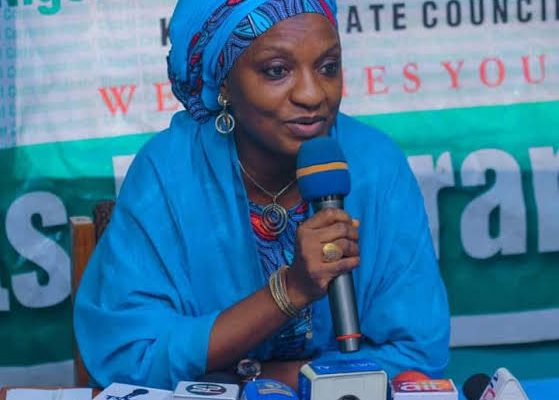
The Minister of Art, Culture and Creative Economy, Hannatu Musawa, has said that Nigerian women need unity of purpose to achieve better representation and succeed politically.
Musawa spoke at the HID Awolowo Foundation Dialogue on Tuesday in Ikenne, the country home of the late sage, Chief Obafemi Awolowo.
The programme is on the theme: “Breaking Barriers or Standing Still? Nigeria Women in Politics 30 Years After Beijing.”

The minister submitted that Nigerian women have never been powerless, noting that history shows they are strongest when they stand firm and united.
She called on women to reorganise their powers in ways that can transform politics.
According to Musawa, if better representation is desired, strategies must be reconsidered, urging people to work together deliberately and consistently across party lines, regions, religions, and ideologies.
“We are powerful, yes, but we are not yet organising our power in the way that truly transforms politics.
“Think of HID Awolowo, whose political organising and grassroots mobilisation kept a movement alive through some of the toughest moments in our national history.
“Think of Funmilayo Ransome-Kuti, who mobilised thousands of Abeokuta women to challenge colonial injustice, a movement so powerful, it shook an entire system.
“Our movements are passionate, but often divided. Our voices are loud, but not always coordinated.
And when we’re fragmented, the system finds it easier to ignore us,” she said.
The minister noted that 30 years after the 1995 Beijing Declaration and the affirmative action plan, there was a need to “recommit to the true essence of power in numbers, not symbolic unity, not unity for photos but strategic, active and sustained unity.”
“When Nigerian women gather, movements rise. When we rise, barriers fall, and when barriers fall, the nation moves forward. We’re capable; we’re ready and together, truly together, we are unstoppable.
In her remarks, Sen. Daisy Danjuma, who chaired the dialogue, emphasised the need to address cultural and structural barriers that challenge women’s legitimacy in leadership.
Danjuma said that Nigerian women have never lacked vision or competence, urging them to move beyond the rhetoric by expanding their access and building relationships.
Delivering a lecture on the theme, Prof. Olabisi Aina, Executive Director, Centre for Gender, Women and Children in Sustainable Development, advocated full political emancipation of the female folk.
Aina highlighted HID Awolowo’s influence across Nigerian political parties during her lifetime.
She noted that Nigeria reached its peak representation in governance in 2007, with 7.8 per cent, stressing the need for top-level commitment, effective budgeting, and strong institutional enforcement to address the country’s compliance gaps.
The United Nations Women representative, Mrs Beatrice Eyong, noted that women’s challenges begin at home, citing issues such as early marriage and poverty, adding that 80 per cent of school dropouts are girls.
Eyong emphasised the need to promote women’s leadership across political parties to achieve the 1995 Beijing Declaration in Nigeria.
The convener of the dialogue, Mrs Tokunbo Dosunmu, affirmed that the dialogue seeks to impact young girls and prepare them for leadership.