














![CAC removes 247 companies from database [Full List]](https://theprimenews.ng/wp-content/uploads/2025/08/Corporate-Affairs-Commission-CAC-building--600x400.webp)















































![‘I love Natasha’ – 2Face announces marriage plans with Edo lawmaker [VIDEO]](https://theprimenews.ng/wp-content/uploads/2025/02/GridArt_20250203_143302913-scaled-1-600x400.jpg)
























































![Europa League: 7 teams qualify for Round of 16, knockout stages [Full list]](https://theprimenews.ng/wp-content/uploads/2025/01/258743-1024x538-1-600x400.jpg)





![‘Jesus take the White House’ – Nathaniel Bassey ministers at Trump’s prayer breakfast [VIDEO]](https://theprimenews.ng/wp-content/uploads/2025/01/Nathaniel-Bassey-1024x681-1-600x400.webp)





















![Copa del Rey: All 8 teams in quarterfinal confirmed [Full list]](https://theprimenews.ng/wp-content/uploads/2025/01/1126686360.jpg.0-1024x683-1-600x400.webp)



































![‘I’m waiting on the Lord for kids’ – Eniola Badmus [VIDEO]](https://theprimenews.ng/wp-content/uploads/2025/01/Eniola-Badmus-1024x764-1-600x400.webp)

































































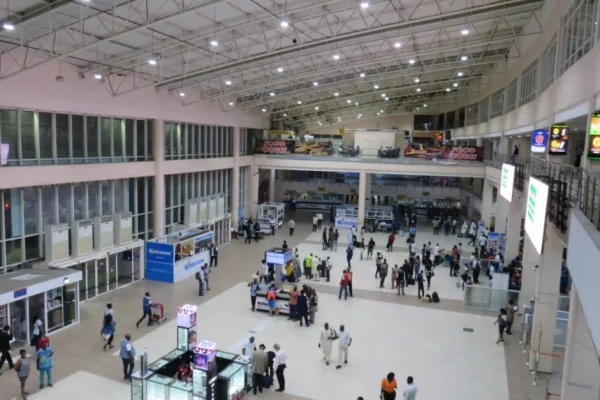















![FIFPRO announces nominees for 2024 Men’s World XI [Full list]](https://theprimenews.ng/wp-content/uploads/2024/12/Image_20241202_160846_058-600x391.webp)




























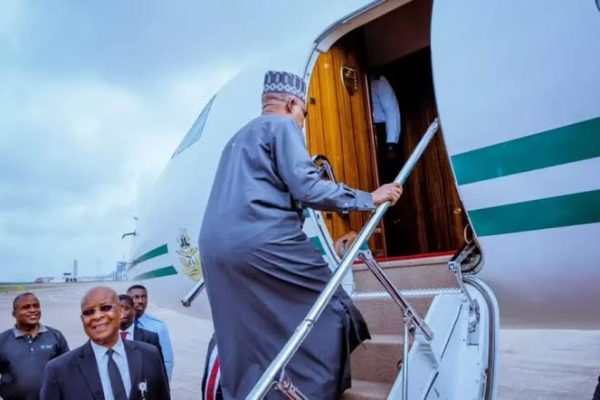








![Jagun Jagun wins big at 2024 BON Awards [FULL LIST]](https://theprimenews.ng/wp-content/uploads/2024/11/20241013_181847-1024x715-1-600x400.jpg)






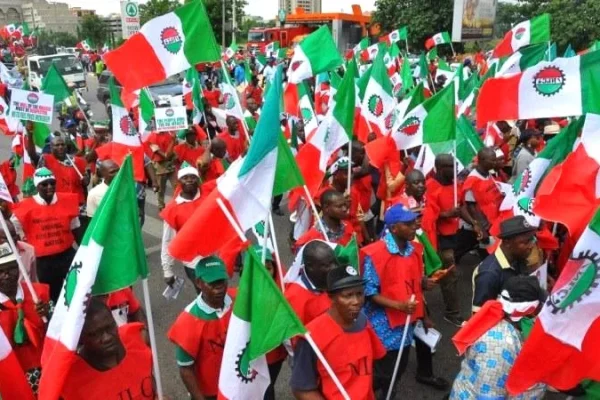




















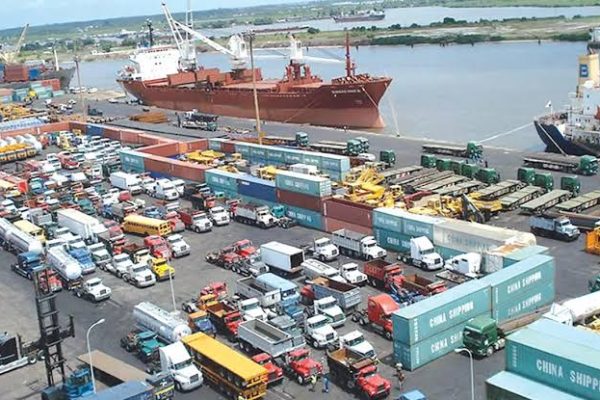


























Nigeria is intensifying efforts to grow non-oil exports through air cargo reforms driven by the Federal Airports Authority of Nigeria, highlighting fresh infrastructure and revenue initiatives while examining their long-term viability.
In the modern global economy, the speed of trade is often as important as its volume. For a nation like Nigeria, endowed with vast agricultural resources, the perennial challenge has been bridging the logistical chasm between the farm gate and the foreign consumer. After years of infrastructural neglect and policy inertia, there are finally tangible signs that the government is treating this gap as an economic emergency rather than an afterthought.
Traditionally, Nigeria’s aviation sector has been viewed through the narrow lens of passenger travel, packed terminals, delayed flights, and aviation safety issues, while the cargo value chain quietly limped along in the shadows. Now, a strategic shift is underway. A dedicated Cargo Development Directorate has been established within the Federal Airports Authority of Nigeria, marking a concerted effort to inject dynamism into the country’s air freight infrastructure.

Created in December 2024 by the Honourable Minister of Aviation and Aerospace Development, Festus Keyamo, the Directorate is meant to be a driver of change for Nigeria’s struggling non-oil export sector. Although the initiative is still in its early stages, it represents a significant shift for a sector long plagued by inefficiencies and overlooked opportunities.
Nigeria, despite being a major agricultural producer of goods like yams, peppers and fruits, has found few viable pathways to global markets because of logistical gaps that make exported goods slow or too costly to be competitive. To succeed in international markets, particularly for perishable produce like mangoes, okra and leafy vegetables, seamless cold chains and rapid transit are essential. Exporters often lose large proportions of harvests to spoilage before products even reach an airport.
Compounding the challenge, Nigeria’s air cargo ecosystem has historically been fragmented, hampered by decaying infrastructure, bureaucratic bottlenecks, and institutional inertia that favours passenger aircraft operations over freight handling. Cargo was an afterthought, a perception that the new directorate aims to reverse.
The strategic reforms championed by FAAN’s leadership and operationally driven by Director of Cargo Development & Services, Lekan Thomas, are designed to overhaul the status quo. Significant milestones already achieved include the commissioning of a new cargo terminal at the General Aviation Terminal in Lagos, a key development intended to improve export logistics.
In May 2025, FAAN commissioned a dedicated domestic cargo terminal at the General Aviation Terminal in Lagos. Designed to improve cargo handling capacity and efficiency, the facility is expected to reduce bottlenecks and enhance connectivity for agricultural exports. The authority has plans to replicate this model across other states, including Abuja and Kano, expanding modern cargo processing nationwide. Officials noted that the facility positions Lagos as a central cargo hub and is meant to attract national and international freight operators, a key step toward decentralising and optimising cargo movement.
Industry stakeholders, however, stress that air cargo success is not decided at cruise altitude but on the ground, particularly at farm gates, customs checkpoints and cargo loading bays. The Directorate’s approach involves wide engagement with stakeholders across the supply chain, with meetings bringing together the Nigeria Customs Service, freight forwarders, ground handlers, cooperatives and government agencies to reduce friction in the export process. These collaborative efforts are intended to dismantle longstanding silos that have constrained cargo throughput.
Experts have also stressed the need for digital reforms such as single-window clearance systems, modern cargo villages, and integrated cold chain solutions to align Nigeria’s cargo ecosystem with global standards. Beyond physical infrastructure, the cargo push includes reforms to strengthen financial sustainability and revenue collection for aviation logistics. After a 15-year hiatus, FAAN resumed direct collection of cargo revenue at the Murtala Muhammed International Airport cargo terminal, positioning officials from the Directorate of Cargo Development and Services at cargo release points to plug revenue leakages and improve accountability.
However, these revenue reforms have also sparked controversy. A planned tariff increase raising cargo charges from N7 to N25 per kilogram triggered industry opposition and protests, forcing stakeholders into negotiations that resulted in a compromise tariff of N15 per kg. While authorities say tariff adjustments are necessary to sustain improved operations, critics argue they risk pricing Nigerian produce out of international markets.
These developments align with the Federal Government’s ambition to expand Nigeria’s economy beyond oil and build a more resilient non-oil export base. For the aviation sector, this means evolving from a “landlord” of airport property into a logistics partner enabling trade. If the Cargo Directorate succeeds, the implications for Nigerian agriculture could be profound. Not only could more farmers access profitable export markets, but Nigeria could also begin to reposition itself as a regional export hub, especially for perishables that command higher prices when delivered quickly and efficiently.
The government recently unveiled an intra-African air cargo corridor that offers significant discounts for exporters moving goods across key African markets. Such initiatives could reduce logistics costs and expand exporter access beyond traditional Europe-Middle East routes. Still, hurdles remain. Some reports highlight that despite these efforts, Nigeria’s export performance lags because of wider economic factors like exchange rate instability and high operational costs. In 2025, cargo exports by air fell due to rising freight costs, a reminder that logistics reforms must be paired with broader economic stability to attract market growth.
Notably, in previous reports, analysts emphasised challenges such as inadequate aircraft availability, infrastructure deficits and an imbalance between imported and exported cargo, with more goods arriving into Nigeria than leaving, as critical hurdles that must be tackled head-on. For now, the direction of the cargo reforms is encouraging. By prioritising dedicated facilities, stakeholder cohesion, digital reforms and regulatory focus, Nigeria is laying the groundwork for an agro-export economy that could compete on the world stage.
The farms are ready. The demand exists globally. The logistics, long the weakest link, may finally be catching up. After years of talk, the air cargo engine is starting to fire. And if it flies, Nigeria’s agricultural export ambition might finally take off.