









![CAC removes 247 companies from database [Full List]](https://theprimenews.ng/wp-content/uploads/2025/08/Corporate-Affairs-Commission-CAC-building--600x400.webp)































![‘I love Natasha’ – 2Face announces marriage plans with Edo lawmaker [VIDEO]](https://theprimenews.ng/wp-content/uploads/2025/02/GridArt_20250203_143302913-scaled-1-600x400.jpg)







































![Europa League: 7 teams qualify for Round of 16, knockout stages [Full list]](https://theprimenews.ng/wp-content/uploads/2025/01/258743-1024x538-1-600x400.jpg)





![‘Jesus take the White House’ – Nathaniel Bassey ministers at Trump’s prayer breakfast [VIDEO]](https://theprimenews.ng/wp-content/uploads/2025/01/Nathaniel-Bassey-1024x681-1-600x400.webp)














![Copa del Rey: All 8 teams in quarterfinal confirmed [Full list]](https://theprimenews.ng/wp-content/uploads/2025/01/1126686360.jpg.0-1024x683-1-600x400.webp)



























![‘I’m waiting on the Lord for kids’ – Eniola Badmus [VIDEO]](https://theprimenews.ng/wp-content/uploads/2025/01/Eniola-Badmus-1024x764-1-600x400.webp)



























































![FIFPRO announces nominees for 2024 Men’s World XI [Full list]](https://theprimenews.ng/wp-content/uploads/2024/12/Image_20241202_160846_058-600x391.webp)


















![Jagun Jagun wins big at 2024 BON Awards [FULL LIST]](https://theprimenews.ng/wp-content/uploads/2024/11/20241013_181847-1024x715-1-600x400.jpg)
































By Oyez Olatunde Rex
As the primaries approach, the All Progressives Congress (APC) in Kwara is standing at a defining fork in the road. Not the usual kind that produces noise, slogans, and transactional alignments, but the kind that determines whether a party is serious about governance or just managing power.
This is not about who has moved around more, who has printed more posters, or who can “settle” more delegates.

This is about who can run a state.
And if that question is asked honestly, stripped of sentiment, zoning convenience, and financial inducement, the conversation naturally narrows to competence, execution history, and economic imagination.
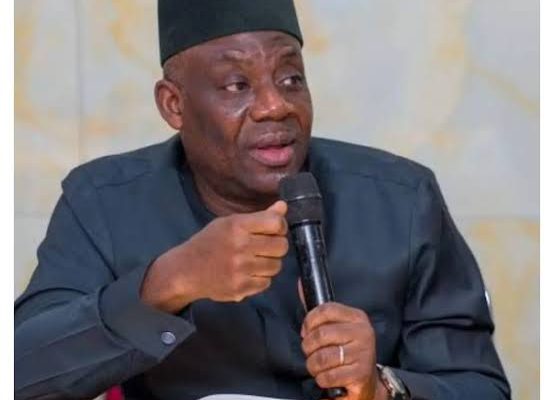
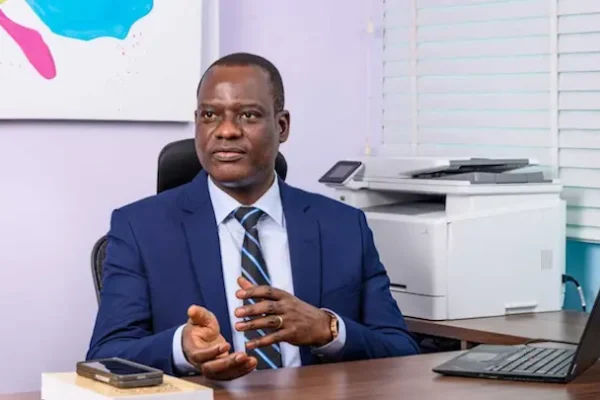
That is where Prof. Wale Sulaiman enters the frame and stands shoulder taller than other aspirants.
Therefore, the real question before APC is:
Can he run a state system?
Strip away the noise. Governance at state level is no longer ceremonial, it is technical. It requires system thinking, revenue generation innovation, institutional discipline, and the ability to translate ideas into working structures.
From available records, Prof. Wale Sulaiman has consistently positioned his argument around capacity, competence, and leadership experience, not sentiment.
He has explicitly argued that Kwara needs leadership with national and international networks, proven management ability, and credibility across levels.
Because the next governor of Kwara will not be inheriting a blank slate, he will be inheriting an evolving system that requires scaling, not experimentation.
And within the APC, one silent expectation is continuity of the current reform trajectory under AbdulRahman AbdulRazaq.
Prof. Sulaiman’s profile fits that requirement unusually well.
He has been part of the system as Special Adviser on Health;
He understands the internal architecture of current reforms; and, He is not coming in to “learn governance from scratch”
This matters, because transitions fail, not because new leaders lack ideas, but because they lack institutional memory. Evidence suggests Sulaiman combines both insider familiarity and outsider-scale exposure.
That combination is rare in state politics.
Let’s come to the real issue, Kwara’s economy.
For decades, the state has operated within a narrow revenue logic: federal allocation, modest agriculture, and limited industrial activity.
That model cannot fund the next phase of development.
What Prof. Sulaiman brings, and this is where the conversation should get serious, is a sector-driven economic alternative: medical tourism.
His proposition is not abstract. It is anchored on a simple economic reality:
Nigerians spend billions annually on foreign medical trips and that money can be retained locally with the right infrastructure in place.
Healthcare, when structured properly, is not a social service alone, it is an economic engine
Available commentary around his agenda describes this clearly. The idea is not just to build hospitals, but to restructure Kwara’s economy around healthcare value chains, services, training, research, and international partnerships.
Think about the implications:
Specialist hospitals attracting regional patients
Training institutions feeding skilled manpower
Ancillary industries pharmaceuticals, hospitality, logistics
Diaspora capital flowing into structured healthcare investments
This is how small economies pivot, not by doing everything, but by doing one thing exceptionally well.
Kwara already has the foundational advantage: calm environment, central location, and growing institutional base.
What it has lacked is a leader who understands how to convert that into a globally competitive niche economy.
Politics is full of promises. What separates serious candidates is execution history.
Independent analyses point to Sulaiman’s track record in building and scaling complex medical systems, including turning modest operations into high-performing institutions with significant revenue growth and workforce expansion.
That is not a campaign promise. That is operational evidence.
For APC delegates, the question should be direct:
Who among the aspirants has actually built something measurable at scale?
Now let’s speak plainly and truthfully to each other as a family, a political family that owes the people giving us their mandate.
Primaries have a pattern. Money flows. Alignments shift. Decisions get rationalised after the fact. But history is unforgiving.
The same delegates who make decisions today will live with the consequences of those decisions in infrastructure, in jobs, in the economic direction of the state.
Choosing based on inducement is easy in the moment.
Choosing based on competence is harder, but it is what endures.
And this is where the APC must be careful not to undermine its own future.
Because once the wrong signal is sent, that the ticket is for the highest bidder, the party weakens its own claim to seriousness.
Beyond the individual delegates, there is a party calculation which delegates must remain conscious of.
The APC party calculation is the need for a candidate who:
. Can win beyond party lines
. Appeals to professionals, youth, and diaspora networks
. Brings credibility that neutral voters respect
Meanwhile, evidence from stakeholder reactions already shows that Sulaiman’s entry has attracted broad-based support across communities and interest groups.
Prof Wale Sulaiman’s kind of cross-sectional appeal is not manufactured overnight.
It is built over time, through visibility, competence, and perceived seriousness.
Fiinally, the 2027 election is a test of Intent which the Kwara people are keenly observing.
APC in Kwara does not lack options.
What it must now prove is whether it has discipline.
The discipline to:
. Ignore noise
. Resist transactional pressure
. Ask the hard question: Who can actually run Kwara in 2027 and beyond?
If that question is answered honestly, not politically, then the decision becomes clearer.
Not because of sentiment.
Not because of noise.
But because of capacity. And at this level, capacity is not a slogan.
It is the difference between a state that moves… and a state that manages itself in circles.