













![CAC removes 247 companies from database [Full List]](https://theprimenews.ng/wp-content/uploads/2025/08/Corporate-Affairs-Commission-CAC-building--600x400.webp)






































![‘I love Natasha’ – 2Face announces marriage plans with Edo lawmaker [VIDEO]](https://theprimenews.ng/wp-content/uploads/2025/02/GridArt_20250203_143302913-scaled-1-600x400.jpg)














































![Europa League: 7 teams qualify for Round of 16, knockout stages [Full list]](https://theprimenews.ng/wp-content/uploads/2025/01/258743-1024x538-1-600x400.jpg)



![‘Jesus take the White House’ – Nathaniel Bassey ministers at Trump’s prayer breakfast [VIDEO]](https://theprimenews.ng/wp-content/uploads/2025/01/Nathaniel-Bassey-1024x681-1-600x400.webp)











![Copa del Rey: All 8 teams in quarterfinal confirmed [Full list]](https://theprimenews.ng/wp-content/uploads/2025/01/1126686360.jpg.0-1024x683-1-600x400.webp)






























![‘I’m waiting on the Lord for kids’ – Eniola Badmus [VIDEO]](https://theprimenews.ng/wp-content/uploads/2025/01/Eniola-Badmus-1024x764-1-600x400.webp)
































































![FIFPRO announces nominees for 2024 Men’s World XI [Full list]](https://theprimenews.ng/wp-content/uploads/2024/12/Image_20241202_160846_058-600x391.webp)

























![Jagun Jagun wins big at 2024 BON Awards [FULL LIST]](https://theprimenews.ng/wp-content/uploads/2024/11/20241013_181847-1024x715-1-600x400.jpg)
































As the Federal Government intensifies efforts to attract investment into Nigeria’s vast mineral resources and halt the export of raw ores, exploration geophysicists on Monday raised concerns that the country could one day be forced to import minerals it is currently extracting and exporting if strategic deposits are not deliberately conserved.
The warning came as the Minister of Solid Minerals Development, Dele Alake, said the Federal Government was strengthening geoscientific data, mineral exploration and professional capacity to transform the mining sector into a major pillar of Nigeria’s economic diversification.
The Nigerian Association of Exploration Geophysicists, however, argued that the push for value addition and increased mining must be matched by a national conservation policy to protect selected high-grade and strategic mineral deposits for future generations and Nigeria’s long-term industrial development.

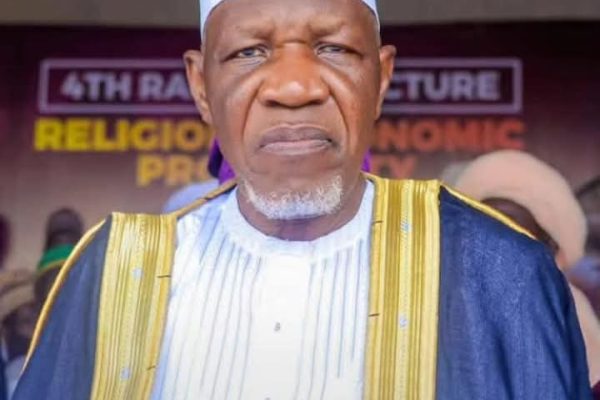
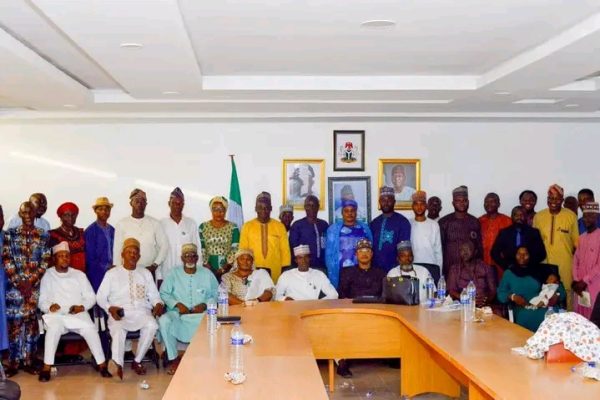
The contrasting but complementary messages emerged at the 4th Annual International Conference and Training Workshop of the association in Abuja, where professionals examined the role of geophysics in resource exploration, environmental management and infrastructure development.
Conference, themed “Geophysics: A Critical Driver in Resource Exploration, Environmental Management and Infrastructural Development,” also featured discussions on artificial intelligence, machine learning, groundwater assessment, geotechnical engineering, policy, investment and capacity building.
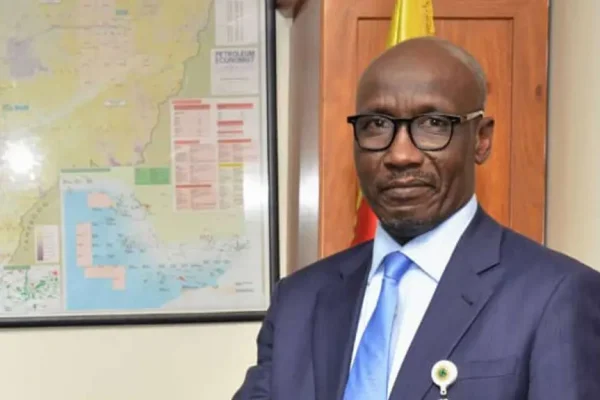
Alake, who was represented by a Director at the Nigerian Geological Survey Agency, Hadiza Godi, said geophysics was more than an academic discipline, describing it as a critical tool for discovering Nigeria’s underground wealth and supporting sustainable national development.
The minister said, “Geophysics is not just an academic pursuit; it is the master key that unlocks our underground wealth, protects our ecosystem, and secures the foundation of our national infrastructure.”
He said the Federal Government had made the generation of reliable geological and geophysical information a central part of its mining reform agenda because credible data remained critical to reducing uncertainty and attracting investment.
According to him, “Accurate and reliable geoscientific data is the ultimate bedrock of mining investment.”
Alake said the ministry, through the NGSA, had expanded geological mapping and undertaken targeted high-resolution airborne geophysical surveys as part of efforts to improve knowledge of Nigeria’s mineral endowment.
He said the exercise had led to the identification of deposits of minerals considered critical to the global energy transition, including lithium, graphite, copper, manganese and rare earth elements, alongside iron, lead, zinc and aluminium.
The minister said, “Through the Nigerian Geological Survey Agency, we have executed targeted high-resolution airborne geophysical surveys and extensive field mapping. We have successfully identified major deposits of critical transition minerals and supporting minerals such as lithium, graphite, copper, manganese, the REEs, as well as the traditional to transitional bridge minerals like iron, lead, zinc, and aluminium.”
But as the government seeks to unlock these resources, the President of NAEG, Akin George, cautioned that Nigeria must avoid a situation where the rush to mine and process minerals leaves future generations without access to strategically important deposits.
George acknowledged the Federal Government’s policy on local value addition, noting that it represented a departure from the long-standing practice of exporting minerals in raw form.
He said, “It is on record that the Ministry of Solid Mineral Development has made mandation for any investor that wants to mine minerals in Nigeria to subject such minerals to value addition. In other words, no mineral leaves the shores of this country without value addition.”
“This concept of value addition shall yield positive results if strictly adhered to. We are aware that investors have started establishing mineral processing plants in almost all the six geopolitical zones of the federation, which shall definitely create more jobs for our teeming youth in the future.”
However, the NAEG president said local processing alone should not become the sole measure of success in Nigeria’s mining policy.
He warned that minerals were finite resources and that the country needed to determine which deposits should be mined immediately, which should be developed for domestic industrial use and which should be preserved as strategic reserves.
He said, “It is well known that Nigeria is endowed with over 34 vast, varied solid mineral resources, spread in about 450 different locations across the 36 states of the federation, including the FCT. It may surprise you to state here that mineral resources are not replenishable commodities. Once mined or taken away, they are not replenished.”
The NAEG president therefore called for a national conservation policy for strategic minerals, particularly as Nigeria accelerates efforts to attract local and foreign capital into the mining sector.
He particularly called for the conservation of selected high-grade deposits of lithium and chromite, as well as other strategic minerals such as uranium, platinum and bauxite where they are found in commercially viable quantities.
On his part, the Executive Secretary of the Petroleum Technology Development Fund, Prof Shehu Ahmed, who was represented by a manager in the fund, Wasiru Ahmed, said the PTDF would continue to support the development of indigenous capacity through training, research, knowledge transfer and mentorship.
Also speaking, a former Minister of Mines and Steel Development, Prof Musa Sada, commended the association for sustaining professional collaboration and stressed the importance of continuous learning in an industry increasingly shaped by technological changes.
Other speakers, including representatives of the Nigerian Mining and Geosciences Society, the Miners Association of Nigeria and the NGSA, called for stronger collaboration among professional bodies and improved archiving of exploration data, samples, drill logs and technical reports.
The conference also paid tribute to the Chairman of the NAEG Board of Trustees, Prof Deborah Ajakaiye, for her pioneering contributions to geophysics and her role in training generations of Nigerian geoscientists.