













![CAC removes 247 companies from database [Full List]](https://theprimenews.ng/wp-content/uploads/2025/08/Corporate-Affairs-Commission-CAC-building--600x400.webp)












































![‘I love Natasha’ – 2Face announces marriage plans with Edo lawmaker [VIDEO]](https://theprimenews.ng/wp-content/uploads/2025/02/GridArt_20250203_143302913-scaled-1-600x400.jpg)





















































![Europa League: 7 teams qualify for Round of 16, knockout stages [Full list]](https://theprimenews.ng/wp-content/uploads/2025/01/258743-1024x538-1-600x400.jpg)





![‘Jesus take the White House’ – Nathaniel Bassey ministers at Trump’s prayer breakfast [VIDEO]](https://theprimenews.ng/wp-content/uploads/2025/01/Nathaniel-Bassey-1024x681-1-600x400.webp)




















![Copa del Rey: All 8 teams in quarterfinal confirmed [Full list]](https://theprimenews.ng/wp-content/uploads/2025/01/1126686360.jpg.0-1024x683-1-600x400.webp)


































![‘I’m waiting on the Lord for kids’ – Eniola Badmus [VIDEO]](https://theprimenews.ng/wp-content/uploads/2025/01/Eniola-Badmus-1024x764-1-600x400.webp)













































































![FIFPRO announces nominees for 2024 Men’s World XI [Full list]](https://theprimenews.ng/wp-content/uploads/2024/12/Image_20241202_160846_058-600x391.webp)


































![Jagun Jagun wins big at 2024 BON Awards [FULL LIST]](https://theprimenews.ng/wp-content/uploads/2024/11/20241013_181847-1024x715-1-600x400.jpg)




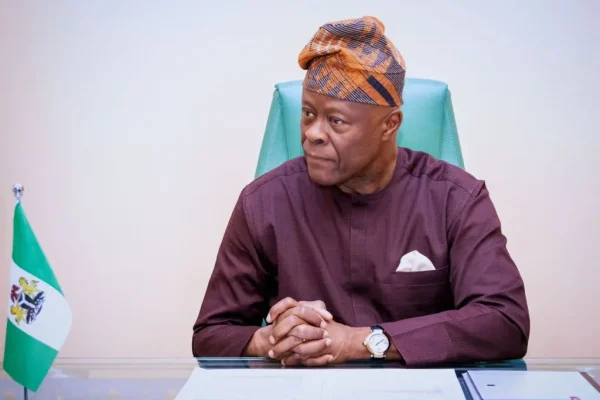












































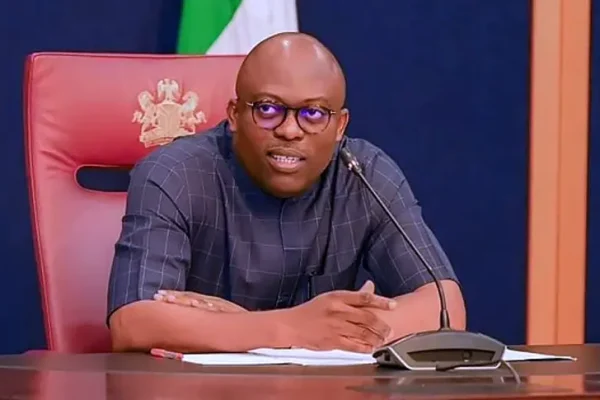
The Minister of Finance and Coordinating Minister of the Economy, Taiwo Oyedele, has inaugurated an inter-ministerial committee to develop a new Value Added Tax Modification Order to support the implementation of Nigeria’s Tax Reform Acts.
The minister announced the inauguration in a statement posted on his X handle on Friday.
He said the committee would draft a modern VAT framework to align with the Tax Reform Acts, which took effect on January 1, 2026.

According to the statement, the committee was inaugurated at the Federal Ministry of Finance headquarters in Abuja.
“The Tax Reform Acts represent the most comprehensive reform of Nigeria’s tax system in decades.
“They simplify our tax laws, improve certainty, enhance competitiveness, protect vulnerable Nigerians, and position our economy for sustainable growth,” Oyedele said
The minister said the committee’s mandate was not to recreate the previous VAT Modification Order, which has been superseded by the new legislation.
Instead, he said it would develop a “modern, coherent, and forward-looking VAT Modification Order that complements the new law and supports Nigeria’s economic transformation.”
According to the statement, the committee will review Nigeria’s existing VAT administration framework, draft a new VAT Modification Order and recommend legislative amendments where necessary.
“The Committee has been mandated to: Review Nigeria’s existing VAT administration framework and identify areas requiring clarification. Engage public and private sector stakeholders to validate classifications and ensure alignment with economic and social objectives.
“Develop comprehensive lists of VAT-exempt and zero-rated supplies, considering revenue implications and international obligations. Draft a clear, implementable VAT Modification Order. Recommend legislative amendments where necessary.”
The minister said the committee’s work would be guided by five principles: fidelity to the law, growth-oriented design, clarity and certainty, broad stakeholder engagement, and international benchmarking.
“This Order should promote industrialisation, investment, exports, innovation, food security, and energy transition, without undermining the integrity of the VAT system,” he said.
The committee has been given six weeks to complete its assignment and submit a draft VAT Modification Order 2026, schedules of VAT-exempt and zero-rated supplies with corresponding Harmonised System (HS) codes, implementation notes and a stakeholder consultation report.
Its members include representatives of the Federal Ministry of Finance, the Nigeria Revenue Service, the Nigeria Customs Service, the Federal Ministry of Industry, Trade and Investment, the Joint Revenue Board, the Manufacturers Association of Nigeria, the Tax Advisory Committee and the Tax Justice and Governance Platform.
“The membership of this Committee brings together deep knowledge, expertise, and experience from across government and the private sector,” the minister said.
The statement added that the Tax Reform Acts, which came into effect on January 1, 2026, were designed to simplify Nigeria’s tax system, improve the ease of doing business, boost investor confidence and support sustainable economic growth.