












![CAC removes 247 companies from database [Full List]](https://theprimenews.ng/wp-content/uploads/2025/08/Corporate-Affairs-Commission-CAC-building--600x400.webp)








































![‘I love Natasha’ – 2Face announces marriage plans with Edo lawmaker [VIDEO]](https://theprimenews.ng/wp-content/uploads/2025/02/GridArt_20250203_143302913-scaled-1-600x400.jpg)






















































![Europa League: 7 teams qualify for Round of 16, knockout stages [Full list]](https://theprimenews.ng/wp-content/uploads/2025/01/258743-1024x538-1-600x400.jpg)





![‘Jesus take the White House’ – Nathaniel Bassey ministers at Trump’s prayer breakfast [VIDEO]](https://theprimenews.ng/wp-content/uploads/2025/01/Nathaniel-Bassey-1024x681-1-600x400.webp)



















![Copa del Rey: All 8 teams in quarterfinal confirmed [Full list]](https://theprimenews.ng/wp-content/uploads/2025/01/1126686360.jpg.0-1024x683-1-600x400.webp)


































![‘I’m waiting on the Lord for kids’ – Eniola Badmus [VIDEO]](https://theprimenews.ng/wp-content/uploads/2025/01/Eniola-Badmus-1024x764-1-600x400.webp)










































































![FIFPRO announces nominees for 2024 Men’s World XI [Full list]](https://theprimenews.ng/wp-content/uploads/2024/12/Image_20241202_160846_058-600x391.webp)

































![Jagun Jagun wins big at 2024 BON Awards [FULL LIST]](https://theprimenews.ng/wp-content/uploads/2024/11/20241013_181847-1024x715-1-600x400.jpg)




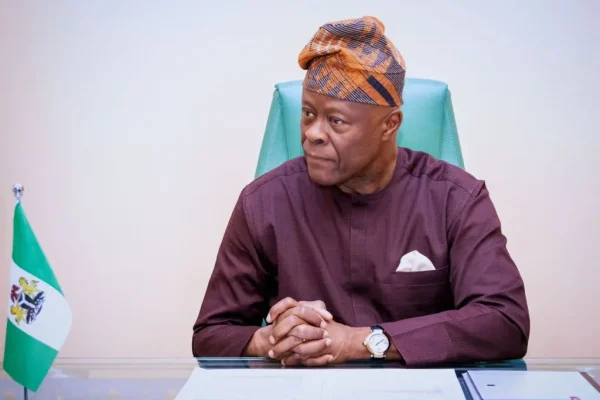










































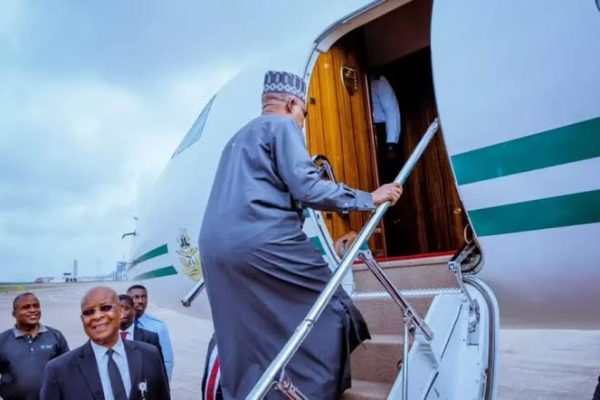
The Federal Government has barred ministers, heads of ministries, departments and agencies and other government appointees from embarking on official foreign trips without prior approval from the Office of the Secretary to the Government of the Federation.
The government also directed the Ministry of Foreign Affairs to make evidence of valid approval from the Office of the Secretary to the Government of the Federation a mandatory requirement for processing official travel documents, including official, diplomatic and service visas for government appointees.
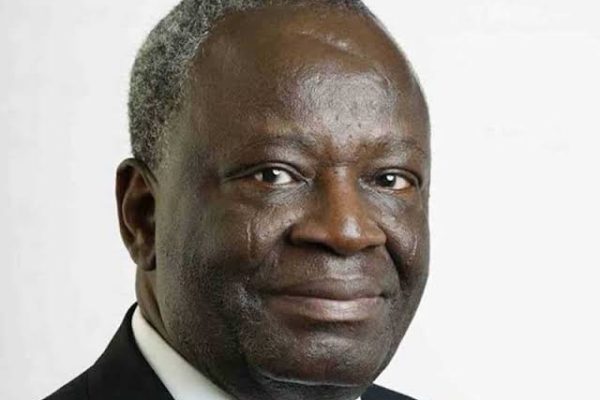
The directive was contained in a circular signed by the Secretary to the Government of the Federation, George Akume, and addressed to top government officials and heads of major Federal Government institutions.

The move comes amid heightened scrutiny of government agencies and individuals claiming to represent the Federal Government, following the controversy surrounding the self-styled Director-General of the purported Presidential Foreign Intervention Promotion Council, Prince Adeniyi Adeyemi.
The controversy has raised questions about how individuals claiming official status can undertake engagements in the name of Nigeria, including foreign engagements, without clear evidence of government authorisation.
However, the latest directive is broader and applies to Federal Government appointees generally.
The circular, titled “Non-Compliance by Government Appointees with the Requirement for OSGF Approval for Official Foreign Trips and the Mandatory Inclusion of OSGF Approval in the Processing of Official Visas,” said the government had observed that some officials continued to embark on official foreign trips without obtaining the required clearance.
It stated, “It has been observed with concern that some Federal Government Appointees continue to embark on official foreign trips without obtaining prior approval from the Office of the Secretary to the Government of the Federation (OSGF), contrary to extant government directives and established administrative procedures regulating official travels outside the country.”
The SGF recalled that the government had issued several circulars over the years to regulate official foreign travel by ministers, heads of ministries, departments and agencies, boards, committees and other public officials.
According to the circular, these directives were issued “with a view to promoting accountability, fiscal discipline and effective coordination of Government business.”
The circular listed a September 18, 2023, circular on “Guidelines for Official Travels by Cabinet Members, Heads of Agencies and Public Officials”, a March 31, 2015, circular on “Guidelines for Official Trips by Chairmen of Federal Government Committees, Boards of Corporations and Government-Owned Companies” and a September 27, 2017, circular on “Additional Cost Control Measures to Guide Foreign Trips by Ministers and Senior Government Officials.”
It also referenced a March 8, 2018, circular on “Observed Indifferent Adherence to Extant Regulations Guiding the Conduct of Foreign Trips by Public Officials” and a November 20, 2012, circular on “Further Cost-Cutting Measures and Fiscal Prudence on Travel by Cabinet Members.”
Despite the previous directives, the SGF said cases of non-compliance had persisted.
The circular stated, “Despite these directives, instances of non-compliance continue to be recorded.”
It warned that the development had broader implications for government administration, stating, “This trend undermines Government’s efforts to ensure proper coordination, accountability, transparency, prudent management of public resources and effective monitoring of official foreign engagements undertaken on behalf of the Federal Government of Nigeria.”
The government consequently reaffirmed the requirement for prior clearance.
The circular stated, “Accordingly, all official foreign trips undertaken by Federal Government appointees shall continue to require prior approval from the Office of the Secretary to the Government of the Federation before such trips are undertaken, except where otherwise expressly provided by law or by specific Presidential directive.”
It added, “This requirement is consistent with the principles of due process, centralised coordination of government business and prudent management of public resources, as reflected in the Public Service Rules, 2021 Edition, the Financial Regulations (Revised Edition, January 2009) and other extant Government directives.”
As part of the immediate measures to strengthen compliance, the Ministry of Foreign Affairs has been directed to ensure that evidence of OSGF approval forms part of the documentation required for official foreign travel.
The circular directed that “The Ministry of Foreign Affairs shall include evidence of valid OSGF approval, where applicable, as a mandatory requirement in the processing of requests for official Notes Verbales, diplomatic facilitation and all applications relating to official foreign travel by Government Appointees.”
The ministry was further directed to communicate the requirement to foreign missions and embassies operating in Nigeria.
It stated, “The ministry is further requested to formally communicate this requirement to all Foreign Missions and Embassies accredited to the Federal Republic of Nigeria, advising that applications for Official, Diplomatic or Service Visas by Government Appointees should, where applicable, be accompanied by duly issued OSGF travel approval as part of the mandatory supporting documentation.”
The new measure therefore gives foreign missions an additional means of verifying whether a Nigerian government official travelling on official business has received the required authorisation.
The Office of the Auditor-General for the Federation was also assigned responsibility for checking compliance with the directive during audit exercises.
According to the circular, “The Office of the Auditor-General for the Federation shall require every government appointee who undertook an official foreign trip at public expense to produce evidence of the requisite OSGF approval during audit exercises.”
The government further warned that public funds spent on unauthorised foreign trips would be subject to scrutiny.
It stated, “Any expenditure incurred in respect of official foreign travel undertaken without the required approval shall be reported appropriately in accordance with extant Financial Regulations and applicable audit procedures.”
The directive also places a direct responsibility on accounting officers and heads of Federal Government institutions to prevent the processing of public funds for unauthorised trips.
It stated, “Accounting Officers, Permanent Secretaries, Chief Executive Officers and Heads of Federal Government Agencies shall ensure that no expenditure relating to official foreign travel by government appointees is processed unless the requisite OSGF approval has first been obtained.”
The SGF consequently directed all ministers, permanent secretaries, accounting officers and heads of ministries, departments and agencies to ensure compliance.
The circular stated, “All Honourable Ministers, Permanent Secretaries, Accounting Officers and Heads of Ministries, Departments and Agencies are hereby directed to ensure strict compliance with the provisions of this Circular.”
It further stated that the directive was effective immediately, declaring, “This circular takes immediate effect and supersedes any administrative practice inconsistent with its provisions, without prejudice to existing extant regulations governing official foreign travel.”
The circular was addressed to the Chief of Staff to the President; Deputy Chief of Staff to the Vice President; all Honourable Ministers and Ministers of State; Head of the Civil Service of the Federation; National Security Adviser; Economic Adviser to the President; Special Advisers and Senior Special Assistants.
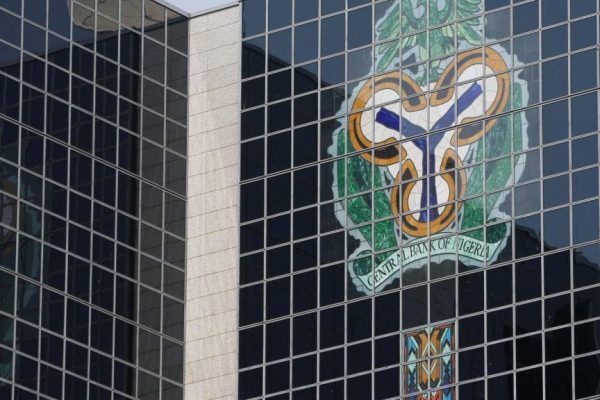
It was also addressed to the Chief of Defence Staff, Service Chiefs and Inspector-General of Police; Governor of the Central Bank of Nigeria; Chairman, Federal Civil Service Commission; Chairman, Police Service Commission; Chairman, Code of Conduct Bureau; Chairman, Code of Conduct Tribunal; Chairman, Federal Character Commission; Chairman, Revenue Mobilisation, Allocation and Fiscal Commission; Chairman, Federal Inland Revenue Service; Chairman, Independent National Electoral Commission; Chairman, National Population Commission; Chairman, Independent Corrupt Practices and Other Related Offences Commission; Chairman, Economic and Financial Crimes Commission and Chairman, National Drug Law Enforcement Agency.
Other recipients listed in the circular were all permanent secretaries and Heads of Extra-Ministerial Departments; Clerk of the National Assembly; Chief Registrar of the Supreme Court of Nigeria; Accountant-General of the Federation; Auditor-General for the Federation; and Directors-General and Chief Executives of Parastatals, Agencies and Government-Owned Companies.
The breadth of the recipients means the directive covers ministers, senior political appointees, permanent secretaries, security chiefs, heads of regulatory and anti-corruption bodies, electoral institutions, financial institutions, government agencies and government-owned companies.
The development is coming against the backdrop of the controversy over the purported PFIPC, which has drawn attention to the need for stronger verification of individuals and organisations claiming to represent the Federal Government.
The purported PFIPC and its self-styled Director-General, Adeyemi, have been at the centre of investigations into alleged impersonation and the use of questionable government documents.
The matter has also raised concerns about how purported government officials could engage public institutions and foreign entities while claiming to represent Nigeria.
The latest directive, however, does not single out the purported PFIPC or Adeyemi.
Instead, it establishes a general requirement that government appointees must obtain central approval before undertaking official foreign engagements.
By directing the Ministry of Foreign Affairs to demand evidence of OSGF approval, the government is also creating a formal verification mechanism for foreign missions processing travel documents for Nigerian officials.
The financial provisions of the circular further link official travel approval to accountability for public expenditure, as accounting officers have been directed not to process expenses relating to foreign trips unless the required approval has been obtained.
The measures are expected to strengthen the Federal Government’s control over official foreign engagements, reduce unauthorised travel and ensure that persons travelling abroad in the name of the government have the necessary approval to represent Nigeria.