








![CAC removes 247 companies from database [Full List]](https://theprimenews.ng/wp-content/uploads/2025/08/Corporate-Affairs-Commission-CAC-building--600x400.webp)



























![‘I love Natasha’ – 2Face announces marriage plans with Edo lawmaker [VIDEO]](https://theprimenews.ng/wp-content/uploads/2025/02/GridArt_20250203_143302913-scaled-1-600x400.jpg)

































![Europa League: 7 teams qualify for Round of 16, knockout stages [Full list]](https://theprimenews.ng/wp-content/uploads/2025/01/258743-1024x538-1-600x400.jpg)


![‘Jesus take the White House’ – Nathaniel Bassey ministers at Trump’s prayer breakfast [VIDEO]](https://theprimenews.ng/wp-content/uploads/2025/01/Nathaniel-Bassey-1024x681-1-600x400.webp)








![Copa del Rey: All 8 teams in quarterfinal confirmed [Full list]](https://theprimenews.ng/wp-content/uploads/2025/01/1126686360.jpg.0-1024x683-1-600x400.webp)


























![‘I’m waiting on the Lord for kids’ – Eniola Badmus [VIDEO]](https://theprimenews.ng/wp-content/uploads/2025/01/Eniola-Badmus-1024x764-1-600x400.webp)



















































![FIFPRO announces nominees for 2024 Men’s World XI [Full list]](https://theprimenews.ng/wp-content/uploads/2024/12/Image_20241202_160846_058-600x391.webp)













![Jagun Jagun wins big at 2024 BON Awards [FULL LIST]](https://theprimenews.ng/wp-content/uploads/2024/11/20241013_181847-1024x715-1-600x400.jpg)

















By Oyez Olatunde Rex
“The easiest way to end poverty is through education. I am a living example.”
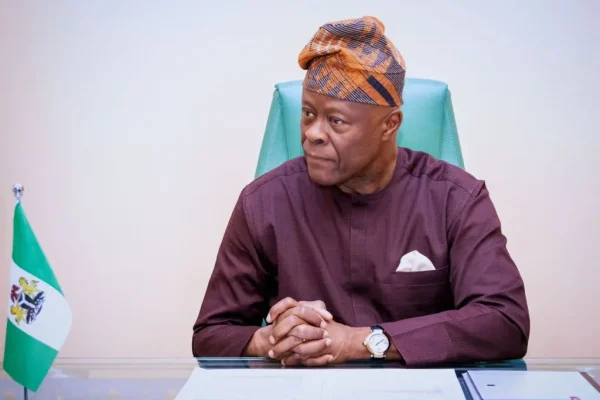
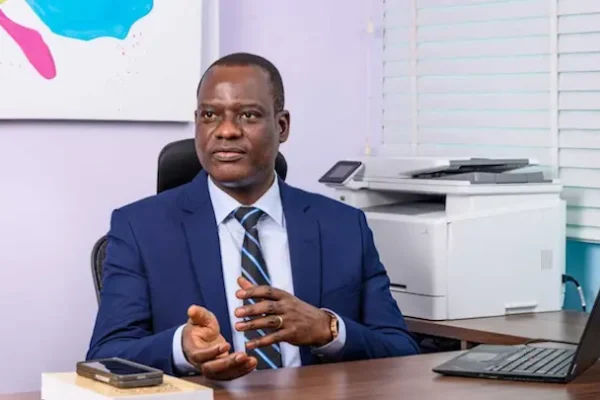
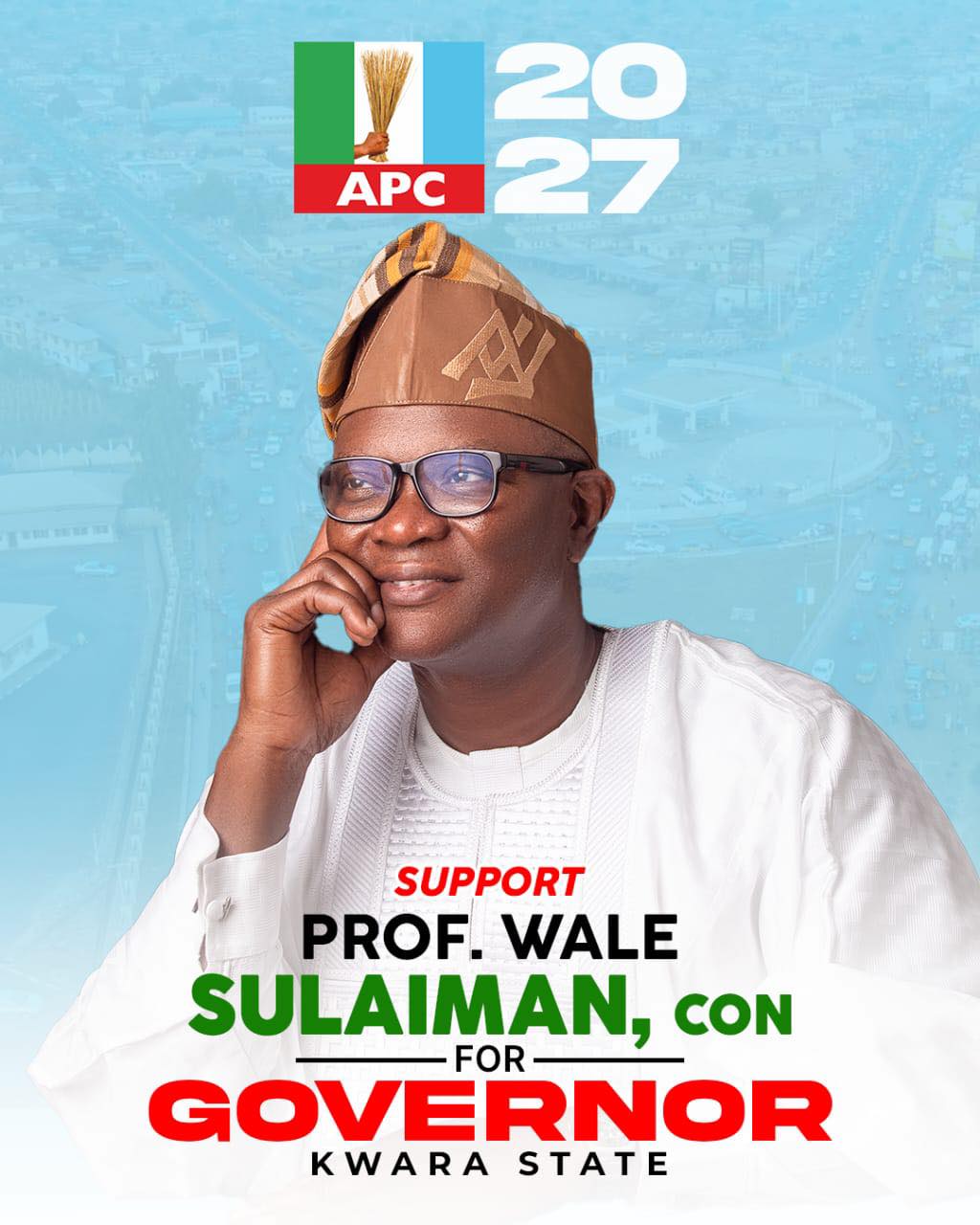
That statement captures the central idea behind Prof. Wale Sulaiman’s Kwara Prosperity Agenda. At its core is a simple but powerful proposition: give every child a genuine opportunity to go to school and you change not only the child’s future, but also the future of the state.

For Prof. Sulaiman, this is not a theoretical argument. It is a personal story.
He did not grow up with privilege or abundance. Yet education opened doors that carried him from modest beginnings in Kwara to global recognition as a respected neurosurgeon. When he speaks about providing free education from primary to secondary school for every child in Kwara, he is not merely making a campaign promise. He is speaking from lived experience.
Across many homes in Kwara today, the challenge is not that parents do not value education. Most do. The real problem is affordability.
School fees, uniforms, textbooks, development levies, and other hidden charges accumulate quickly. One payment today, another tomorrow. Before long, families that struggle to meet these obligations are forced to withdraw their children from school. The result is a quiet but persistent cycle where poverty reproduces itself from one generation to the next.
Prof. Sulaiman’s proposal seeks to confront that cycle directly. His position is straightforward: no child should be denied education because of school fees, and no parent should have to choose between feeding the family and sending a child to school.
In this sense, free education at the primary and secondary levels is not merely an act of social compassion. It is a deliberate strategy for long-term development.
History offers a powerful reference point. In the 1950s and 1960s, the late sage, Obafemi Awolowo introduced free education in the old Western Region. The policy was revolutionary for its time and produced generations of teachers, doctors, engineers, journalists, and administrators who later transformed society. It was not the product of chance but of careful planning, foresight, and bold leadership.
Awolowo understood a simple principle: if a region invests first in education, other forms of development will eventually follow.
The vision now being proposed for Kwara reflects a similar philosophy, adapted to the realities of today.
Consider the implications. A child in Baruten, Offa, Shonga, or Kaiama who receives quality education today could become a doctor, a teacher, a software developer, or an entrepreneur tomorrow. Multiply that possibility across thousands of children throughout the state and the result is a workforce capable of driving economic growth.
This is how unemployment can be reduced, not through temporary political promises but through sustained human development.
It is also how crime can be addressed more effectively. When young people are equipped with education and opportunity, the appeal of destructive alternatives diminishes. Education expands choices and restores dignity by enabling individuals to stand on their own.
For that reason, any serious strategy aimed at lifting people out of poverty must place education at its centre, particularly in the formative years.
Prof. Sulaiman’s position is therefore both bold and practical. If Kwara truly seeks a different future, the state must invest fully in its children rather than halfway.
Decades after Awolowo’s reforms, the impact of that educational revolution continues to shape Nigeria’s intellectual and professional landscape.
The question before Kwara today is equally clear: will the state embrace a similar vision for the future, or continue to manage poverty rather than decisively confront it?