









![CAC removes 247 companies from database [Full List]](https://theprimenews.ng/wp-content/uploads/2025/08/Corporate-Affairs-Commission-CAC-building--600x400.webp)
























![‘I love Natasha’ – 2Face announces marriage plans with Edo lawmaker [VIDEO]](https://theprimenews.ng/wp-content/uploads/2025/02/GridArt_20250203_143302913-scaled-1-600x400.jpg)


























![Europa League: 7 teams qualify for Round of 16, knockout stages [Full list]](https://theprimenews.ng/wp-content/uploads/2025/01/258743-1024x538-1-600x400.jpg)


![‘Jesus take the White House’ – Nathaniel Bassey ministers at Trump’s prayer breakfast [VIDEO]](https://theprimenews.ng/wp-content/uploads/2025/01/Nathaniel-Bassey-1024x681-1-600x400.webp)










![Copa del Rey: All 8 teams in quarterfinal confirmed [Full list]](https://theprimenews.ng/wp-content/uploads/2025/01/1126686360.jpg.0-1024x683-1-600x400.webp)


























![‘I’m waiting on the Lord for kids’ – Eniola Badmus [VIDEO]](https://theprimenews.ng/wp-content/uploads/2025/01/Eniola-Badmus-1024x764-1-600x400.webp)




















































![FIFPRO announces nominees for 2024 Men’s World XI [Full list]](https://theprimenews.ng/wp-content/uploads/2024/12/Image_20241202_160846_058-600x391.webp)









![Jagun Jagun wins big at 2024 BON Awards [FULL LIST]](https://theprimenews.ng/wp-content/uploads/2024/11/20241013_181847-1024x715-1-600x400.jpg)

















A district with the power to influence the outcome of the 2027 election must not remain politically powerless after the votes are counted.
By Olayinka Owolewa
As Kwara State gradually moves towards the 2027 general elections, political activities are beginning to gather momentum. Across the three senatorial districts, politicians are positioning themselves, alliances are being built, interests are being negotiated and the battle for political relevance is already taking shape.

But in the midst of all these calculations, one question deserves to be asked loudly and without sentiment:
What exactly is Kwara South negotiating for in 2027?
This is not merely a question about who will contest under which political party. It is a question about power, political relevance, representation and the future place of Kwara South in the political architecture of Kwara State.
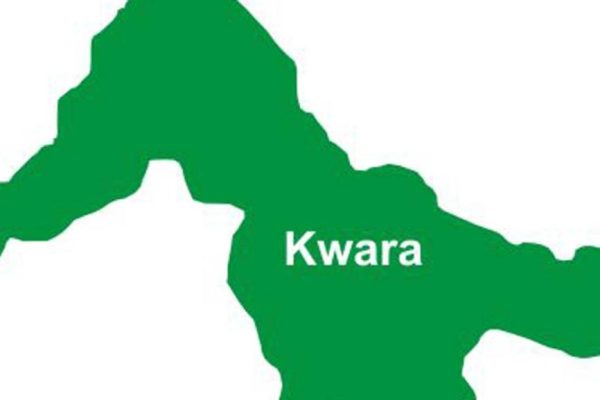
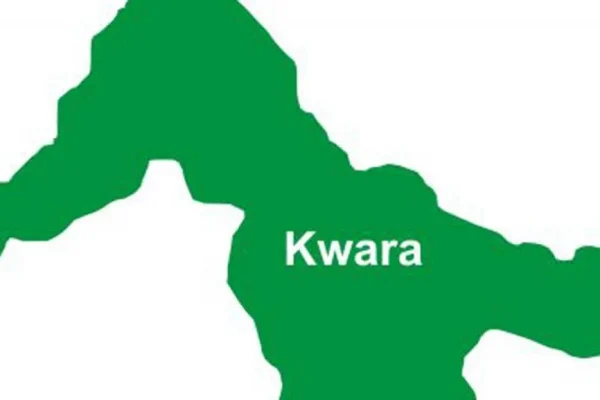
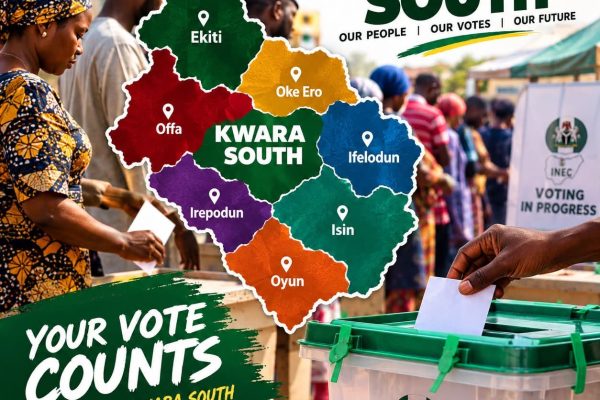
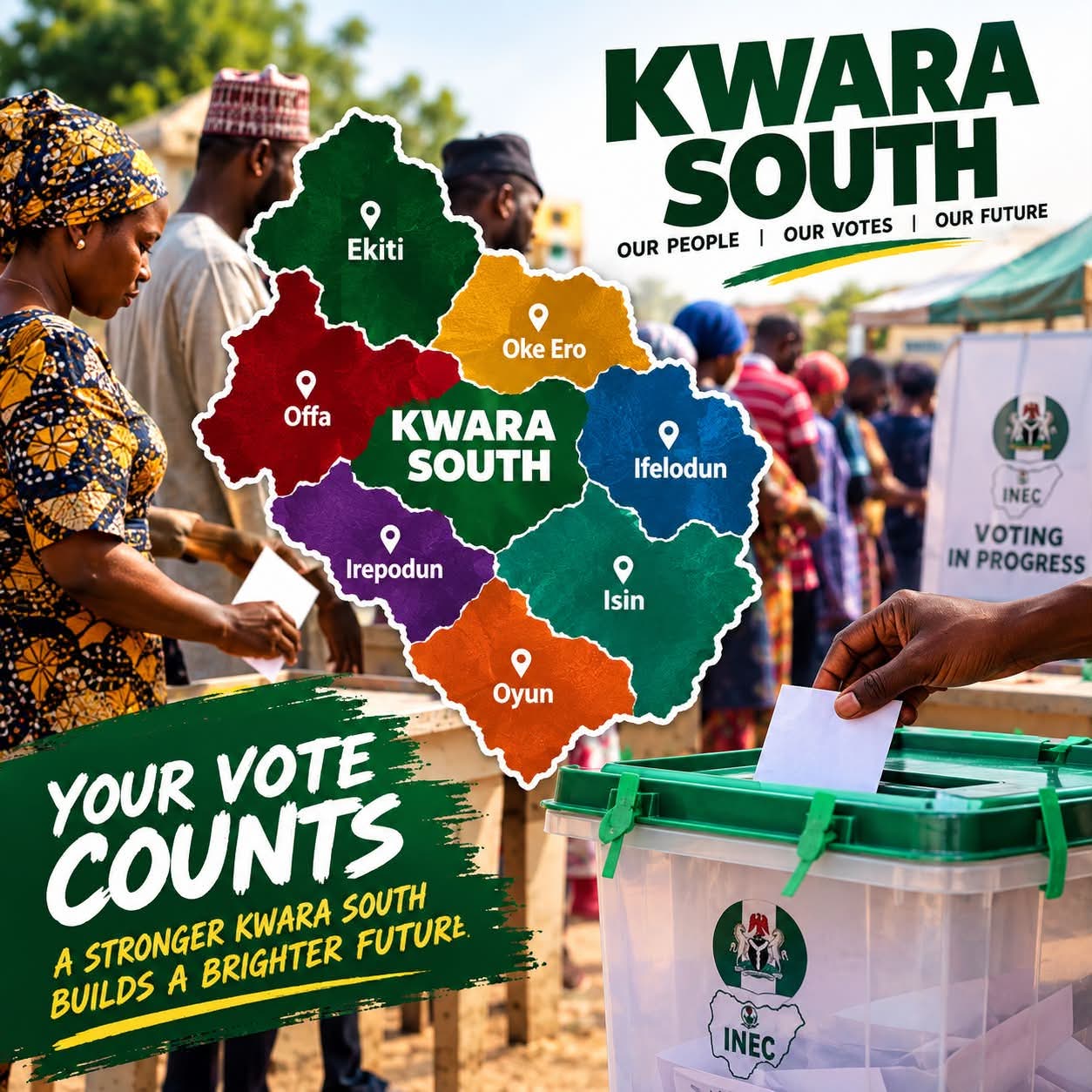
Kwara South is not a political spectator. It is a critical component of the state, comprising seven local government areas — Ekiti, Oke Ero, Offa, Ifelodun, Irepodun, Isin and Oyun — and has repeatedly demonstrated its electoral importance. (Wikipedia)
The 2023 figures alone should have been enough to awaken a stronger sense of political strategy among the people and leaders of the district. In the senatorial election, the APC secured 55,966 votes in Kwara South, while the PDP scored 34,950 and the SDP 24,215. (Voice of Nigeria)
In the 2023 governorship election, the APC also won Kwara South with 74,014 votes, compared with 40,310 for the PDP. (Arkanet)
These numbers tell us something important: Kwara South possesses electoral weight.
The question, therefore, is not whether Kwara South matters.
The question is whether Kwara South understands the value of what it possesses.
The 2027 Question
The build-up to 2027 is already revealing how political calculations are being made in Kwara.
Different political tendencies are positioning themselves. There are movements within the APC, opposition realignments and discussions around candidates and zoning. Recent reports have also shown internal disagreements within the APC in Kwara South over the outcome of its senatorial primary process, while the PDP has been discussing zoning and consensus arrangements for its National Assembly candidates in the district. (Punch Newspapers)
This is politics.
But politics should not end with the question:
“Who gets the ticket?”
For Kwara South, the more important question should be:
“What does Kwara South get after the election?”
That is where the conversation appears to be missing.
There is a disturbing tendency for political conversations in Kwara South to revolve around individuals, party tickets, personal ambitions and immediate political survival.
Too often, the conversation appears to be about who becomes this, who gets that and who controls which political structure.
But where is the conversation about the next five, ten or fifteen years?
Where is the strategic document for Kwara South?
Where is the conversation about political succession?
Where is the negotiation for meaningful representation in the executive structure of the state?
Where is the conversation about infrastructure, education, agriculture, industrial development, employment, healthcare, roads, rural development and investment?
Where is the conversation about what happens when the 2027 election is over?
These are the questions that should occupy the minds of serious political leaders.
A Leadership Vacuum?
Perhaps the greatest concern is not that Kwara South lacks politicians.
Far from it.
There are politicians everywhere.
There are political groups everywhere.
There are aspirants everywhere.
There are people seeking appointments, elective offices and influence.
But political activity is not the same thing as political leadership.
This is where Kwara South must have an honest conversation with itself.
A district can have hundreds of politicians and still suffer from a shortage of leadership.
Leadership is not measured by the number of people surrounding a politician. It is measured by the ability to organise people around a common interest, negotiate effectively, think beyond personal ambition and secure outcomes that benefit generations yet unborn.
The worry, therefore, is that Kwara South appears to have too many individuals fighting for personal political space and not enough people sitting around the table to discuss a collective political future.
If the political energy of the district is consumed by personal ambitions and individual interests, then the district may enter 2027 with many candidates, many camps and many political meetings — yet leave the election without having negotiated anything substantial for itself.
That would be a tragedy.
Kwara South Should Be Thinking Beyond 2027
One thing is becoming increasingly clear in the political calculations surrounding the 2027 governorship election:
2027 is not the end of the political game. It is only another stage in it.
Whoever eventually emerges as governor will immediately become part of the succession conversation for the next political cycle.
That is politics.
The moment a new governor is sworn in, people will begin calculating who could succeed him or her. Political structures will begin repositioning. Alliances will begin forming. New aspirants will emerge.
And the question is:
Where will Kwara South be when that conversation begins?
Will Kwara South once again wait until the eve of another election before trying to negotiate?
Or will it have already established a political understanding that gives the district a meaningful stake in what comes next?
This is why the absence of a serious conversation about post-2027 political arrangements should concern every thoughtful son and daughter of Kwara South.
The district should not merely be interested in helping someone win.
It should be interested in knowing what its support is worth.
The Central Question
There is another political reality that cannot be ignored.
Kwara politics has historically been influenced by strong political structures, particularly around the state capital and the Central Senatorial District. That does not necessarily make it wrong or illegitimate. Every political bloc will naturally pursue its interests.
But Kwara South must also pursue its own interests.
If the district possesses the numbers capable of influencing the outcome of a statewide election, then those numbers should translate into political bargaining power.
That is not selfishness.
That is politics.
The real danger is giving away electoral value without securing political value in return.
If Kwara South votes overwhelmingly for a particular political direction, what has been negotiated?
If the district becomes decisive in determining who wins the governorship, what does it receive in terms of political inclusion?
If Kwara South provides the margin that determines victory, who will speak for the district when appointments, development priorities and future political arrangements are being discussed?
These are not questions of greed.
They are questions of political maturity.
The District Must Stop Being an Electoral Number
Kwara South must begin to see itself not merely as a voting bloc but as a political constituency with legitimate interests.
The district has intellectuals.
It has professionals.
It has businesspeople.
It has academics.
It has farmers.
It has young people.
It has traditional institutions.
It has former and serving political office holders.
It has people with national and international exposure.
Most importantly, it has people capable of thinking beyond the next election.
What is missing is not capacity.
What appears to be missing is coordination.
A proper political leadership structure should be able to bring people together and say:
“These are the interests of Kwara South. These are our priorities. These are the positions we seek. These are the commitments we expect. These are the things we will measure after the election.”
That is leadership.
And if Kwara South had leadership commensurate with the brilliance, exposure and intellectual capacity of its people, perhaps the political conversation would already be different.
We would not simply be discussing candidates.
We would be discussing governance.
We would not simply be discussing tickets.
We would be discussing power-sharing and succession.
We would not simply be discussing who wins in 2027.
We would be discussing what Kwara South looks like in 2031, 2035 and beyond.
Who Is Negotiating for Kwara South?
This may be the most uncomfortable question of all.
Who is sitting across the table on behalf of Kwara South?
Who is speaking to the major political blocs?
Who is asking the difficult questions?
Who is demanding commitments?
Who is saying that Kwara South’s support cannot be taken for granted?
Who is preparing the district for the political conversation that will begin immediately after the 2027 election?
From the public conversation so far, there appears to be far more discussion about individual political ambitions than about a collective bargaining strategy for the district.
That should worry everyone.
Because elections come and go.
Politicians come and go.
Political parties change.
Alliances collapse and new ones are formed.
But the people of Kwara South remain.
The roads remain.
The schools remain.
The hospitals remain.
The unemployed youths remain.
The farmers remain.
The communities remain.
The development challenges remain.
Therefore, the political strategy of Kwara South must be bigger than the ambition of any single politician.
2027 May Be Decided Differently — But What Will Kwara South Gain?
There is a strong possibility that Kwara South could once again play a decisive role in determining the direction of the 2027 governorship election.
The district’s 2023 voting numbers demonstrate that it cannot simply be dismissed as politically insignificant. (ThisDayLive)
But electoral influence without political negotiation is incomplete.
It is possible to determine who wins an election and still lose politically.
That happens when a constituency delivers its votes but has no clearly defined demands, no negotiating team, no written commitments and no long-term strategy.
Kwara South must therefore ask:
What have we negotiated for?
Not what has been promised.
Not what someone said at a political gathering.
Not what a politician whispered to a few people.
What has actually been negotiated?
What commitments have been secured?
What political understanding exists?
What happens after 2027?
Who succeeds whom?
Where does Kwara South stand in that conversation?
These are questions that should be debated openly by political leaders, professionals, youth groups, traditional stakeholders and ordinary citizens.
The Time for a Kwara South Political Agenda Is Now
There is still time.
The answer is not for Kwara South to become permanently partisan.
It is not for traditional rulers to become partisan political actors. Indeed, recent stakeholders’ discussions in the district have emphasised the importance of keeping traditional institutions above partisan politics. (Businessday NG)
Rather, what Kwara South needs is a non-partisan political agenda.
A document that says:
These are our priorities.
These are our expectations.
This is the kind of representation we want.
This is the development agenda we expect whoever seeks our support to commit to.
And perhaps most importantly:
This is the political future we want to negotiate after 2027.
Such an agenda should not belong to APC.
It should not belong to PDP.
It should not belong to ADC.
It should not belong to any political party.
It should belong to Kwara South.
Political parties will come asking for votes. Candidates will come asking for support. They will make promises. They will tell the people why they are the best option.
Kwara South should listen.
But it should also ask:
“What are you offering the district beyond your election?”
The Choice Before Kwara South
The 2027 general election presents Kwara South with an opportunity, but opportunity without strategy can quickly become another missed chance.
The district can continue with fragmented politics, where hundreds of individuals pursue their own ambitions, or it can begin building a political leadership capable of negotiating collectively.
It can continue asking who is running.
Or it can begin asking what the runners are willing to commit.
It can continue fighting over today’s political positions.
Or it can begin planning for tomorrow’s political power.
It can remain an electoral constituency.
Or it can become a political force.
The choice is ultimately that of the people.
But one thing should be clear:
Kwara South should not wait until after the 2027 election to start discussing what should have been negotiated before the election.
By then, the bargaining power may already have been spent.
The real question is therefore not whether Kwara South will matter in 2027.
It will.
The real question is whether Kwara South will understand the value of that importance.
Because if the district can determine the direction of an election but cannot determine the direction of the political conversation that follows it, then what exactly has it won?
2027 is coming.
The campaigns will come.
The politicians will come.
The promises will come.
But before the votes are cast, Kwara South must answer one fundamental question:
What have we negotiated for?
And if the answer today is “nothing yet,” then perhaps that is the most urgent political conversation Kwara South needs to begin.


