














![CAC removes 247 companies from database [Full List]](https://theprimenews.ng/wp-content/uploads/2025/08/Corporate-Affairs-Commission-CAC-building--600x400.webp)














































![‘I love Natasha’ – 2Face announces marriage plans with Edo lawmaker [VIDEO]](https://theprimenews.ng/wp-content/uploads/2025/02/GridArt_20250203_143302913-scaled-1-600x400.jpg)






















































![Europa League: 7 teams qualify for Round of 16, knockout stages [Full list]](https://theprimenews.ng/wp-content/uploads/2025/01/258743-1024x538-1-600x400.jpg)





![‘Jesus take the White House’ – Nathaniel Bassey ministers at Trump’s prayer breakfast [VIDEO]](https://theprimenews.ng/wp-content/uploads/2025/01/Nathaniel-Bassey-1024x681-1-600x400.webp)




















![Copa del Rey: All 8 teams in quarterfinal confirmed [Full list]](https://theprimenews.ng/wp-content/uploads/2025/01/1126686360.jpg.0-1024x683-1-600x400.webp)


































![‘I’m waiting on the Lord for kids’ – Eniola Badmus [VIDEO]](https://theprimenews.ng/wp-content/uploads/2025/01/Eniola-Badmus-1024x764-1-600x400.webp)













































































![FIFPRO announces nominees for 2024 Men’s World XI [Full list]](https://theprimenews.ng/wp-content/uploads/2024/12/Image_20241202_160846_058-600x391.webp)



































![Jagun Jagun wins big at 2024 BON Awards [FULL LIST]](https://theprimenews.ng/wp-content/uploads/2024/11/20241013_181847-1024x715-1-600x400.jpg)





































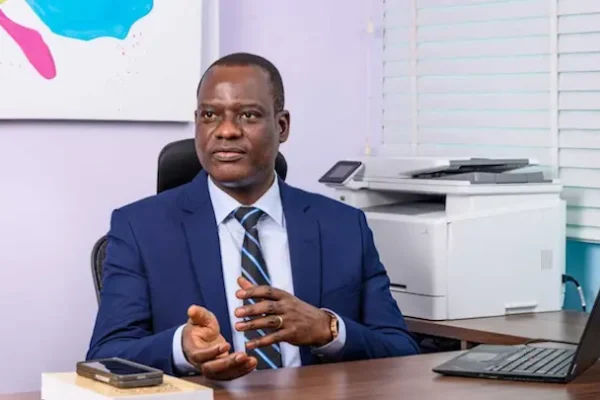














The Minister of State for Education, Prof. Suwaiba Said Ahmad, has expressed satisfaction with the ongoing conduct of the Computer-Based West African Senior School Certificate Examination (CBT-WASSCE), describing the exercise as a major success and a significant milestone in Nigeria’s transition to digital examinations.
Speaking on Wednesday, after inspecting CBT and paper-and-pencil examination centres at Government Secondary School, Garki, and Federal Government Boys’ College, Garki, Abuja, the minister said students demonstrated confidence and competence in the use of the CBT platform, while examination officials maintained a conducive and credible environment.
Prof. Ahmad, who interacted directly with candidates during the monitoring exercise, said feedback from students indicated that they were comfortable with the technology and encountered no difficulties navigating the computer-based system.

“I’m happy with what I have seen. This is the first time we are conducting the CBT examination in a government school of this nature, and the students are happy with it.
“I spoke with some of them and they confirmed they prepared for the examination and had no issues using the computers,” she said.
The minister noted that the CBT centres visited had successfully conducted multiple examination sessions without experiencing any significant technical failures, a development she attributed to extensive pilot testing and software validation carried out before deployment.
According to her, the examination software has so far performed efficiently, with no reported cases of candidates being unable to access questions or complete their examinations due to technical challenges.
“One thing we are sure of is that we carried out extensive pilot testing. From the feedback we received, this is already the seventh paper being written using the CBT platform in some centres, and there have been no technical glitches affecting candidates’ access to examination questions,” she stated.
She further disclosed that examination centres were equipped with alternative power sources to guarantee uninterrupted operations, explaining that many schools were relying on solar energy or generators rather than the national grid.
“Power supply has not been a factor because schools were advised to use alternative sources. Some are on solar power, while others are using generators. That has helped ensure a smooth process,” she added.
At the paper-and-pencil examination centre, the minister also commended the orderly conduct of candidates and invigilators, describing the atmosphere as conducive and consistent with acceptable examination standards.
“I observed a proper examination environment. The students were well spaced and focused, and there was no unnecessary interaction among them. That is what we expect in a credible examination setting,” she said.
Addressing questions on the federal government’s plans for a nationwide migration to CBT examinations, Prof. Ahmad revealed that authorities had initially targeted a full transition by 2026 but were compelled to adopt a phased approach due to infrastructure gaps, particularly in rural and underserved communities.
She explained that the lack of nearby CBT facilities in some areas made an immediate nationwide switch impractical, prompting the government to simultaneously expand digital infrastructure while maintaining conventional examination options.
The minister said schools selected for CBT examinations are primarily those with functional ICT facilities and adequate computer systems capable of accommodating candidates in multiple examination streams.
“The major criterion is the availability of functional ICT infrastructure. Schools must have enough computers to cater for their students. Where such facilities are unavailable, we cannot yet implement CBT examinations,” she explained.
While reaffirming the federal government’s commitment to eventually digitising all public examinations, Prof. Ahmad stressed that no definitive timeline could be announced until the necessary infrastructure is fully in place nationwide.
“We are engaging state governments and strengthening facilities in our federal unity colleges. The goal is to reach a stage where all examinations can be conducted through CBT, but we must first ensure that the required infrastructure is available before making that transition,” she said.
The minister’s inspection formed part of ongoing federal monitoring efforts aimed at assessing the readiness of schools and the effectiveness of the newly expanded CBT examination system across the country.